
Alphabet C
Chaitemura chava kuseva
Meaning:
It describes a dramatic change in someone’s fortune for the better—moving from a state of poverty or hardship to a state of wealth or comfort.
Deeper Insight:
Cultural Context: This proverb is used to highlight that a person who was once poor has now “struck it rich” or, sometimes, to describe someone who has become arrogant after acquiring wealth unexpectedly. English Equivalent: “From rags to riches” or “the tables have turned.”
Similar proverbs:
1. Chaikanya chototsa
2. Chaitotsa chokanyawo.
Chakabaya chikachokera
Meaning:
Literal translation: what pierced (stabbed | stung | injured) has moved on or itss gone. Once you have initiated an action, particularly a negative or harmful one, you must accept that it has set something in motion that cannot be easily undone or recalled.
Deeper Insight:
Once a wrong is done or a word is spoken, it is gone (“chikachokera”). You cannot go back in time to fix it. If you have initiated a conflict or caused pain, you should expect that action to follow its course or for the target to be affected.
It is often used in situations where someone is dealing with the lasting results of a past action, or as a warning to think before acting because once the “piercing” occurs, you cannot undo it.
Chakatanga ndochakachenjedza.
Meaning:
It is often interpreted as Experience is a great teacher. The first attempt, particularly if it involves mistakes, pain, or failure, teaches us to be cautious and wiser in future endeavors.
Deep Insight:
It suggests that going through a challenging situation for the first time gives a person the knowledge needed to handle it better next time. Similar to the English proverb “Once bitten, twice shy,” it implies that bad experiences drive people to be more careful. It is used to advise someone to learn from the errors of those who came before them.
Chakafukidza dzimba matenga

Meaning:
Literal translation: what covers houses are roofs. You can never truly know what happens inside someone’s home—whether good or bad—because those details are hidden behind closed doors.
Deeper Insight:
Just as roofs on houses often look similar from the outside, outward appearances can deceive. A family may appear to live perfectly or happily, but secretly suffer from immense struggles, debt, or turmoil.
Just as roofs on houses often look similar from the outside, outward appearances can deceive. A family may appear to live perfectly or happily, but secretly suffer from immense struggles, debt, or turmoil.
Chara chimwe hachitswanyi inda
Meaning:
One person is limited in what he can achieve compared to team effort. Chara chimwe translated to Shona means a thumb finger. Inda means a louse. Translating this Shona proverb to English, it means one finger cannot crush a louse.
Deeper Insight:
Individuals rely on others for strength and success (a sense of “I am because we are”).
A reminder to seek help or to support others in their endeavors.
Similar Proverb:
Rume rimwe harikombi churu (A single man cannot surround an anthill).
Charova Sei Chando Chakwidza Hamba Mumuti
Meaning:
Translates to: “How severe must the cold be to make a tortoise climb a tree?”. It is used to describe a situation where an individual achieves an extraordinary, unexpected, or seemingly impossible feat, often because extreme circumstances or immense pressure forced them to adapt and succeed.
Deeper Insight:
For example, when someone who is usually dismissed or considered incapable surprises everyone by producing high-quality work. An individual who, despite being doubted, has been practicing secretly and suddenly demonstrates immense skill under pressure.
An extreme situation forcing someone to come up with a creative, never-before-seen solution to survive or succeed. Alternative | Similar Proverbs:
- Sango Rinopa Waneta
- Aive Madziva Ava Mazambuko, Aiva Mazambuko Ava Madziva.
Charovedzera Charovedzera Gudo Rakakwira Mawere Kwasviba
Meaning:
What you are used to doing, you can do with ease even under difficult or dark circumstances, illustrating that familiarity breeds competence and confidence. It translates literally to “What’s familiar, is familiar; the baboon climbed the steep cliff in the dark,” emphasizing that experience allows one to perform well despite challenges.
Literal Translation: “What’s familiar, is familiar; the baboon climbed the steep cliff in the dark”.
Deeper Insight:
A person accustomed to a task (like a baboon to climbing) can accomplish it effortlessly, even when conditions are poor (like darkness), because of their ingrained skill and experience.
Application: It’s used to describe situations where someone succeeds easily due to practice, overcoming doubts from others.
Chava Chigondora Chava Chimombe Kutadza Kutunga Hurema Hwacho
Meaning:
This proverb is often used to emphasize that when someone has grown into a position of responsibility, adulthood, or capability, they are expected to act accordingly.
Just as a full-grown ox is expected to have sharp horns and use them to defend itself or fight, a mature person is expected to stand on their own feet, defend themselves, and manage their own affairs.
Deeper Insight:
If a person fails to do what is expected of them in their role, it is considered their own fault, weakness, or stupidity – failure of character rather than a lack of opportunity. It is a call to stop relying on others for protection or sustenance when you are capable of doing it yourself.
Example Application: If a young adult refuses to work or take responsibility for their life, relying instead on their parents, an elder might use this proverb to mean, “You are now a grown person; failing to provide for yourself is your own failing.
Chakanaka Chakanaka Mukaka Haurungwi (Munyu)
Meaning:
It means that something which is already perfect, inherently beautiful, or functional does not need unnecessary, forced improvements or additions to make it better.
Deeper Insight:
It advises appreciation of goodness, beauty, or skill, rather than trying to criticize or “fix” it unnecessarily. Similar to how natural, pure milk is best enjoyed as it is, certain things are ideal in their natural state.
Interfering with something good can ruin it. It’s used to encourage contentment and recognition of quality, often in situations where someone is trying to find fault in a perfect situation, or adding unnecessary changes to something that was already functioning well.
Chawawana idya nehama mutorwa ane hanganwa
Meaning:
Literal translation: what the heart desires, the tortoise chose its shell. People have the freedom to choose what they want and must be allowed to embrace the consequences of their choices.
Deeper Insight:
Every individual has the right to follow their own desires. When it comes to personal preferences—whether in marriage, career, or lifestyle—people should be permitted to pursue what makes them happy.
Just as a tortoise carries its heavy shell everywhere it goes and is perfectly content with it, a person who makes a deliberate choice should be willing to live with, and take responsibility for, the outcome of that choice without complaint.
This proverb is usually used when a third party tries to criticize someone else’s choice in a partner or path in life and reminds that person that if the one who made the choice is happy, others should respect that decision.
Chemhanza Chemudzimu Ndechewadanirwa
Meaning:
It highlights that while ancestral spirits can provide luck, success is usually granted to those who have actively asked for it or put effort into seeking it.
Deeper Insight:
It implies wisdom in knowing when to make noise (shout for help/pursue opportunities) and when to wait. Success requires applying the right approach to the right situation.
You are likely to receive only what you have prepared for or called upon, suggesting that passive waiting rarely leads to significant fortune.
Chenga Ose Manhanga, Hapana Risina Mhodzi
Meaning:
Literal translation: chenga ose manhanga: collect | keep all the pumpkins. Hapana risina mhodzi: There isn’t one without seeds. Every person, situation, or effort has hidden value or potential.
Value in Everything: Even if someone or something looks useless, weak, or unimpressive (like a small or misshapen pumpkin), it can still offer something valuable (the seeds).
Deeper Insight:
This proverb emphasizes treating everyone as equals, as everyone possesses unique qualities, talents, or value, as highlighted by. A commonly associated interpretation is that “there is a reward in trying all things,” implying that keeping an open mind leads to hidden opportunities or rewards.
Chidziva chakadzikama ndicho chinogara ngwena.
Meaning:
It translates literally to: “The quiet pool is the one in which the crocodile lives.” It serves as a warning against underestimating quiet or harmless-looking people, as they may be dangerous or harbor hidden dangers.
Deeper Insights:
Just as a calm, still pool looks harmless but hides a dangerous crocodile, a person’s quiet or humble demeanor does not necessarily reflect their capacity for action or danger.
It is often the silent, unassuming individuals who can cause the most damage or hold dangerous secrets. It advises one to be observant and not dismissive of quiet situations or individuals, as unexpected threats often arise from such places.
In essence, the proverb advises vigilance and caution, suggesting that outward calmness can mask inward danger.
Chikomo Chiremera Chevari Kure Vari Pedyo Vanotamba Nacho
Meaning:
Why Do We Value What’s Distant and Neglect What’s Near? Why Do We Get Taken For Granted? ” Ichokwadi vakuru vanoreva pavanoti chikomo chevari kure. Iyi itsumo inoreva kuti kune zvinhu zvekuti zvagara zvichiwanikwa munharaunda nekudaro vamwe vanhu havachazvikoshesa nekuti vajairana nazvo.
Vanotongozvitora sezvinhu zvisina maturo asi vasingagari munharaunda vanenge vachitokoshesa chinhu ichocho.
Deeper Insight:
Tsumo iyi inopesana neinoti mwana washe muranda kumwe. Iyi inotaura kuti chinhu chinokosha munharaunda chinopihwa ruremekedzo munharaunda imomo chete.
Chitiyo Kupinda Muzai Huona Amai
Meaning:
For one to achieve a complex or seemingly impossible task (like a chick re-entering an egg), they must have observed or learned from an experienced person (the mother) how to do it.
Deeper Insight:
Wisdom comes with guidance: It often highlights that youth or inexperience needs the guidance of elders or experts to succeed in difficult endeavors.
Contextual Application: If someone has managed to do something, they must have had access to inside knowledge, training, or guidance from someone who knows the process intimately.
Chiri Mumusakasaka Chinozvinzwira
Meaning:
People tend to take the advice, teachings, or warnings that specifically relate to their own individual situations or needs. Just as the contents inside a container are most directly affected by what is happening to it, people naturally resonate with the truths that directly apply to their own lives.
Deeper Insight:
General advice given to a group is selectively absorbed. Individuals within the group will internalize only the message that strikes home or addresses their personal circumstances.
Chitsva Chiri Murutsoka
Meaning:
New things are in the foot” or “You get new experiences by moving to different locations,” encouraging travel, exploration, and stepping out of your comfort zone to find new opportunities and perspectives, rather than staying stagnant. Literal Translation: “New things are in the foot | shoe.
Deeper Insight:
It’s about the idea that to find new things, learn new lessons, or achieve new results, you must be active and move, literally or figuratively, to new places or stages in life.
Application: It can apply to seeking new job opportunities, understanding different cultures, or progressing in life by taking action rather than waiting for things to happen.
Chitaurirwa Mbare Dzekumusana.
Meaning:
The proverb means that no matter how well someone describes an experience, you can never truly understand or appreciate it fully until you go through it yourself.
Deeper Insight:
It suggests that listening to advice is not enough; people often need to make their own mistakes to learn the full lesson. Just as you cannot see or feel the exact pain of a sore on your back that someone else is describing, you cannot fully grasp the depth of an experience without personal involvement.
Chinoziva ivhu kuti mwana wembeva anorwara
Meaning:
Only those closest to you truly understand your deep problems or feelings, similar to how the ground near a mouse’s nest knows its condition better than outsiders. Outsiders often see only the surface, while family or close community members understand the hidden struggles or inner turmoil.
Literal Meaning: The soil/earth (ivhu) knows (chinoziva) that the baby mouse (mwana wembeva) is sick (anorwara).
Deeper Insight:
Those who are physically and emotionally close to someone are the ones who truly grasp their internal issues, pain, or challenges. Application: It advises against making assumptions about others’ lives and emphasizes the importance of close relationships for understanding reality, as seen during crises like Cyclone Idai where survivors’ voices were most critical.
Chinokanganwa idemo, chitsiga hachikanganwi
Meaning:
The axe forgets, but the tree that was cut never forgets”. It highlights that the perpetrator of a wrongdoing often forgets their actions, while the victim bears the emotional or physical scars forever
Deeper Insight:
Perpetrator vs. Victim: The axe is the instrument that inflicts the harm and is immediately done with the action (it “forgets”). The stump, having suffered the damage, carries the marks and the memory of the event indefinitely.
Consequences of Actions: It serves as a caution that actions have lasting consequences, even if the person who committed them doesn’t dwell on them.
Chimwe nechimwe chine nguva yacho
Meaning:
The proverb translates directly to “Everything has its own time”. It is a profound piece of wisdom emphasizing patience, proper timing, and divine order in life events.
Deeper Insight:
The proverb teaches that you cannot rush success or force a season to change before its time. Just as crops need a specific season to grow, personal success, healing, or breakthroughs have appointed times.
Application: This proverb is used to console someone experiencing misfortune (encouraging them that better times will come) or to caution someone against greedily rushing into situations before they are ready.
Key Takeaway: Do not despair in hard times, and do not be arrogant in good times; trust that every situation has its appointed moment.
Chirema Ndechina Mazano Chinotamba Chakazendama Kumadziro.
Meaning:
This proverb emphasizes that an intelligent or resourceful person understands their limitations and works within them to achieve their goals. It implies that cleverness/wisdom (mazano) is more valuable than just physical strength, allowing a person to succeed despite constraints.
Deeper Insight:
The Imagery: A person with a physical disability (chirema) who wants to dance or move (chinotamba) will use the available support—the walls—to do so safely (chakazendama kumadziro). It highlights the necessity of adapting to one’s circumstances rather than acting foolishly.
Chinokura Usipo Imombe Munda Unokura Nokuvandurirwa.
Meaning:
It means that valuable assets or projects (like fields/crops) require active effort and daily attention to succeed, whereas some things (like livestock) can grow on their own.
Deeper Insight:
You cannot expect a business, project, or personal development to thrive without active cultivation, maintenance, and attention (nokuvandurirwa means “by being renewed” or “extended”).
If you neglect your responsibilities, they will not prosper; you cannot rely on luck or passive growth for everything.
Application: It is a call to hard work and active management, warning that neglecting daily, small efforts will lead to failure in key areas of life.
Chomujiri ndechemhanza chemudzimu ndechewadanirwa
Meaning:
Chomujiri – what comes by chance / accident. Chemhanza – luck or fortune. Chemudzimu – what comes from the ancestors / spiritual calling. Ndechewadanirwa – is something you are called to, summoned to, or destined for. What comes by chance is just luck, but what comes from the ancestors (or the spirit) is a calling.
Deeper Insight:
The proverb contrasts random success with destined purpose. It says: Some things happen to you because of luck or coincidence. Other things happen because they are tied to your calling, destiny, or ancestral mandate—and those are not accidental.
In Shona worldview, if something keeps pulling you, follows you, or persists despite resistance, it may not be mhanza (luck) but kudanirwa—a calling linked to your spiritual lineage.
How it’s often used:
- To explain why someone cannot escape a certain role (healer, leader, artist, mediator, etc.)
- To remind people not to dismiss deep, recurring paths as “just luck”
- To emphasize respect for ancestral purpose over coincidence
Chomukuru Hachikumbirwi
Meaning:
The property or belongings of an elder are not asked for. An elder or leader has the discretion to use or distribute their own resources as they see fit.
Deeper Insight:
This proverb emphasizes respect for authority and the understanding that leaders (elders) do not need to ask permission or seek approval from their juniors regarding their own property or decisions.
Chura Kugara Mumvura Handi Kunwa.
Meaning:
Literally translates to: Just because a frog lives in water, it doesn’t mean it drinks it (frogs actually absorb water through their skin, they don’t drink with their mouths).
Deeper Insight:
Do not judge a situation or a person based solely on surface-level observations. Take time to understand the true nature of a situation before acting or concluding.
English Equivalent:
“Appearances can be deceiving” or “Do not judge a book by its cover.”
Chikuriri Chine Chimwe
Meaning:
It warns those who are currently at the top of their game—whether in wealth, status, or physical strength—not to boast or mistreat others, as their reign is not permanent. It reflects the Shona cultural philosophy that life is full of shifts and balances; nothing remains dominant forever.
Deeper Insight:
Cultural Context: In Zimbabwean culture, this tsumo (proverb) is frequently used to discourage bullying, dictatorship, or pride. It acts as a leveling mechanism, reminding communities that power dynamics are fluid and that everyone is subject to a higher authority or the changing tides of life.
Chisi hachieri musi vacharimwa
Meaning:
In traditional Shona culture, chisi is a designated sacred day of the week—often tied to honoring ancestral spirits—when heavy labor like farming or construction is strictly forbidden to allow the land and the people to rest.
Deeper Insight:
If someone broke the rules and farmed on chisi, it might look like nothing happened because the crops didn’t immediately wither. However, the cultural belief is that a calamity or misfortune will eventually strike the offender at a later, unforeseen time.
It is often used to counsel against reckless living, crime, or deceit, reminding individuals that hidden wrongs will eventually be exposed and punished.
Chisingaperi chinoshura
Meaning:
All things are not permanent. Whether you are going through immense hardship or enjoying a period of great fortune, everything eventually comes to an end.
Deeper Insight:
Time and circumstances transform all things. Situations that seem frozen in time will ultimately break their pattern and “baffle” or amaze observers by how they change.
Chako ndechako kuseva unosiya muto
Meaning:
When you own something, you have absolute discretion over how you use, enjoy, or even waste it. Using the cultural imagery of a meal, the saying notes that if you own the plate of food, you have the right to eat it exactly how you please—you can choose to leave the gravy untouched or even throw it away.
Deeper Insight:
Total Freedom: You never enjoy the same level of comfort, control, or flexibility with borrowed items as you do with what you have rightfully acquired.
Chinonzi regedza ndechiri mumaoko chiri mumoyo unofa nacho
Meaning:
Secrets that remain buried inside you till death. What is in the heart is in a hidden cave; you will die with it unless you choose to share them.
Deeper Insight:
No one can read your mind. If you do share nobody else will ever know. However, carrying a painful secret, can cause personal harm, sometimes you need to communicate rather than suffer alone in silence.
English equivalent:
“What the heart doesn’t share, the body suffers in silence.“
“Closed mouths don’t get fed“ (in the context of expressing needs).
Closely related Shona proverb:
“Mwana asingachemi anofira mumbereko“ (A child who does not cry dies in the baby-sling/unnoticed).
Chembere masikati usiku imvana
Meaning:
People can show a calm, ordinary, or frail side in public, but reveal a very different nature behind closed doors. Someone who leads a double life or surprises others with hidden capabilities.
Deeper Insight:
By day, a person looks like an elderly, inactive woman; by night, she transforms into someone else. Appearances deceive. A person may act innocent, weak, or proper in public, but act differently in private.
English Equivalents:
“Don’t judge a book by its cover.” “Still waters run deep.” “A wolf in sheep’s clothing” (though this usually leans toward malicious intent, whereas the Shona proverb can be neutral or descriptive of unexpected private behavior.
Chembere mukadzi hazvienzani nekurara mugota.
Meaning:
An old woman is a wife; it cannot be compared to sleeping in the bachelor’s quarters.” English equivalent: “Half a loaf is better than no bread” or “Something is better than nothing.”
Deeper Insight:
In traditional Shona culture, young unmarried men slept in a separate communal hut called the gota. Having a wife—even an older or less-than-ideal one (chembere)—means a man has a companion, which is far better than being lonely bachelor. Appreciate what you have, having something is better than having nothing at all.
Chinokura chinokotama musoro wegudo chave chinokoro
Meaning:
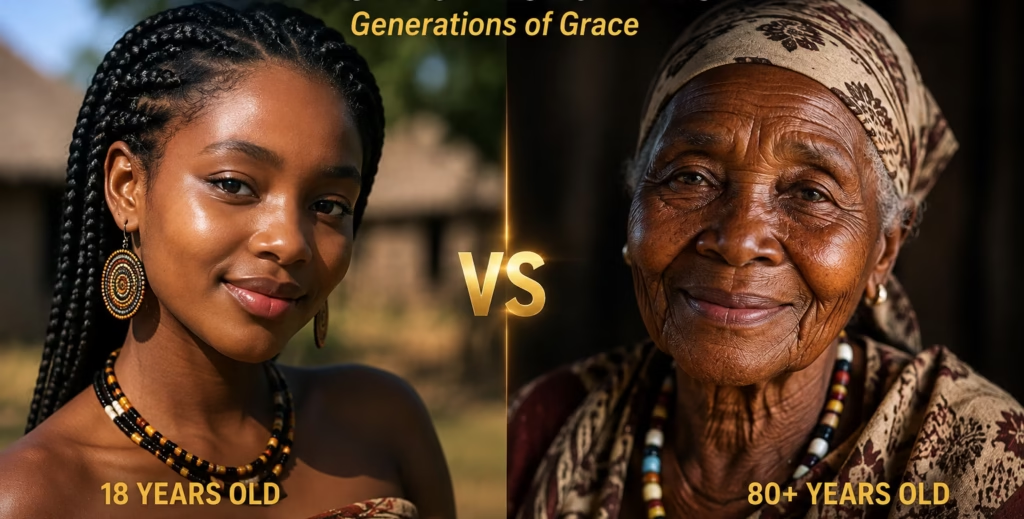
All things depreciate, age, or lose their power, status, and physical strength over time. English Equivalents: “Every dog has its day (and then grows old)” “All good things come to an end.“
Deeper Insight:
It describes a person who was once powerful, wealthy, famous, or very good looking, but has now lost their glory due to old age or changing circumstances. Life Lesson: It reminds the young not to be arrogant in their youth because age comes for everyone.
Chitende chinorema ndechine mhodzi
Meaning:
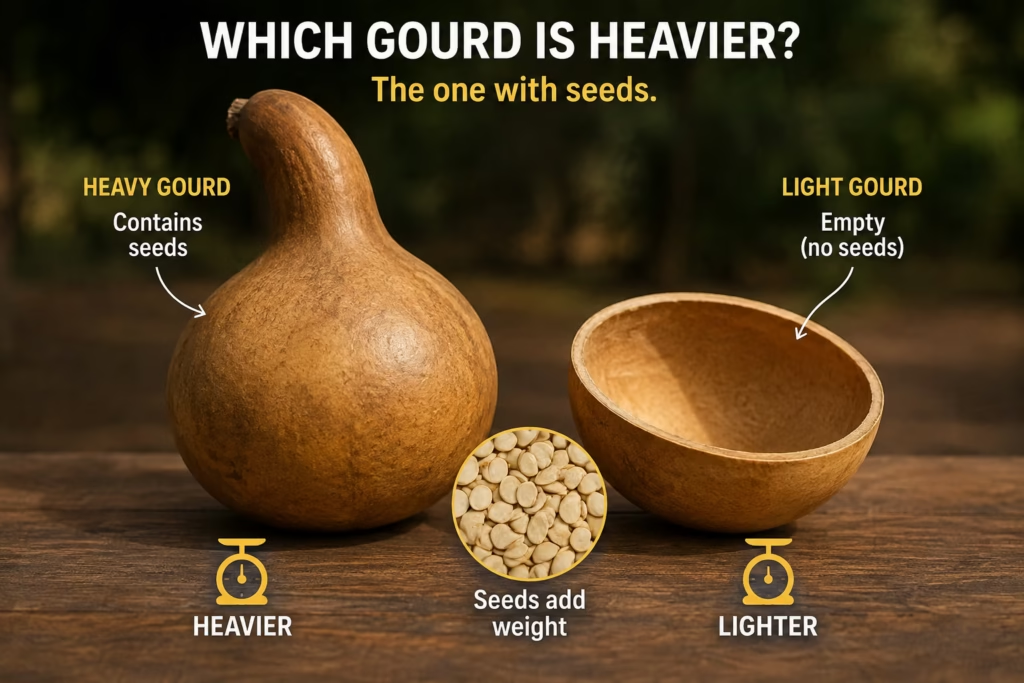
The true value or substance of things comes from within (character) rather than outward appearances.
Deeper Insight:
People with true wisdom, integrity, or capability may not boast or show off. Their worth is felt through their deep character, just as a heavy gourd proves its value from what it holds inside.
English Equivalents:
“All that glitters is not gold.” “Still waters run deep.” (Refers to quiet or unassuming people having rich inner depth).”A golden mind shines through a poor dress.” (Values true inner worth over external presentation).
Chirere mangwana chigozokurerawo
Meaning:
Translates literally to “Raise it well, and it will care for you tomorrow.” English equivalent: “Care for the child and the child will care for you tomorrow. Similar as the Western saying “What goes around comes around” or “As you make your bed, so you must lie on it.
Deeper Insight:
Life Lesson: One good turn deserves another. Sow good seeds to reap a good harvest. As you sow, so shall you reap.
China manenji hachifambisi chinomirira kuti mavara acho aonekwa
Meaning:
A mystery takes time to unfold. Literal Translation: A shocking or mysterious event does not move quickly; it waits for its true colours to be seen first.
Deeper Insight:
A major crisis, disaster, never happens out of nowhere. It develops slowly, dropping subtle hints, red flags along the way. Only after the final disaster strikes do people look back and make sense of all the prior warning signs.
Life Lesson: Be observant and diligent. You must pay attention to small, unusual changes in life, business, or relationships so you can stop a problem before it fully matures into a crisis.
English Equivalents: “Coming events cast their shadows before them.” “There were writings on the wall.” (Referring to the clear signs that preceded a disaster).”Where there’s smoke, there’s fire.” (Small signs reveal a bigger hidden situation).
Chinono chine ngwe bere rakadya richifamba
Meaning:
Strike while the iron is hot”, and “The early bird catches the worm”.
Deeper Insight:
A leopard (ingwe) is a highly meticulous, slow, and cautious hunter. It takes its time stalk-hunting and carefully dragging its kill up into a tree. But the hyena (bere) is an aggressive, opportunistic scavenger that eats quickly, often while on the move, to secure its meal before anyone else can snatch it away.
Life Lesson: Act decisively without delay when an opportunity presents itself. Overthinking, hesitating, will cause you to lose out to faster, more aggressive competitors.
English Equivalents: “He who hesitates is lost.” (The best direct thematic match regarding the dangers of delaying action).”There is no time like the present.” (Urging immediate action over procrastination).
Chiri pamuchena chiri pamutenure
Meaning:
If you have nothing, whatever you manage to get often doesn’t seem to last. It is like putting money into a pocket with a hole.
Deeper Insight:
Poor and vulnerable people often lack a safety net. When a poor person manages to gain something valuable, an unexpected problem can quickly take it away.
English Equivalents:
“A poor man’s joy is short-lived.”
“Misfortunes follow the poor.”
“When it rains, it pours.”
For example:
A low-income worker may save money for months to buy something important, only for an unexpected medical emergency or a sudden breakdown to wipe out all their savings.
Chomujiri ndechemhanza chemudzimu ndechewadanirwa
Meaning:
Don’t expect to receive things on a silver platter. “Easy come, easy go” and “Ill-gotten gains seldom prosper.”
Deeper Insight:
Rewards from casual jobs, lucky breaks, or unearned opportunities can be unstable. Luck can run out at any time. Life lesson: Don’t rely too much on temporary or uncertain things. Instead, invest in genuine skills and build something that truly belongs to you.
English Equivalents:
“Easy come, easy go.”
“A fool’s bolt is soon shot.”
“What is meant for you will not pass you by.”
For example:
Relying entirely on a rented property can create a false sense of security. If the landlord gives you notice to leave, you could suddenly find yourself without a home.
Chawawana batisisa mudzimu haupi kaviri
Meaning:
“Opportunities come once in a lifetime.”
Literal Translation:
“Hold on to what you have found or what has been given to you; the ancestral spirits do not give twice.”
Deeper Insight:
When a rare blessing, talent, or opportunity comes your way, value it and make good use of it. Do not waste your current opportunity assuming that another one will easily come along.
English Equivalents:
“Opportunity knocks but once.”
“Make hay while the sun shines.”
“A bird in the hand is worth two in the bush.”
For example:
If you receive a rare scholarship to study at a prestigious university, take it seriously. Study hard and make the most of it instead of wasting the opportunity, because you may not get the same chance again.I
Chada mwoyo hachikoni mwoyo chiremba
Meaning:
“The heart wants what it wants” and “Love is blind.”
Deeper Insight:
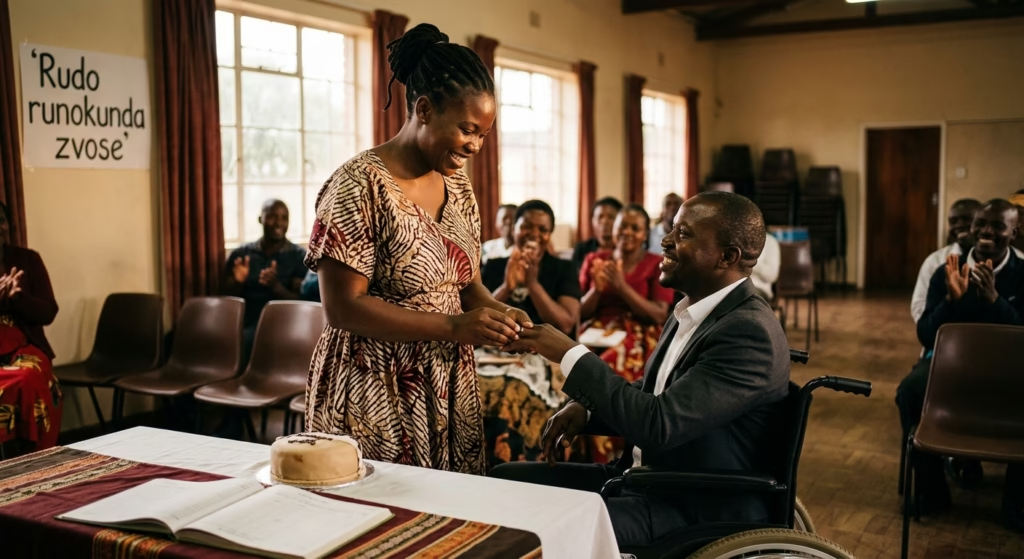
These expressions describe the power of human emotions, desire, and love over logic and other people’s opinions. When someone truly sets their heart on something, they may continue pursuing it despite obstacles or opposition. Sometimes, the heart chooses what the mind cannot explain.
English Equivalents:
“Love is blind.”
“Where there’s a will, there’s a way.”
“Love will find a way.”
For example:
A person may choose to marry someone who is poor or has a disability simply because they deeply love them, despite their family’s disapproval.
Shona Equivalent:
Chidamoyo hamba yakada makwati
Chura kugara mumvura handi kunwa
Meaning:
“You can lead a horse to water, but you can’t make it drink.”
Literal Translation:
“A frog living in water does not mean it is drinking the water.”
Deeper Insight:
Being exposed to something does not mean you will benefit from it. Simply being close to an opportunity is not enough; you must be willing to take advantage of it.
English Equivalents:
“You can lead a horse to water, but you can’t make it drink.”
“Proximity is not intimacy.”
“Opportunity means little if you do not use it.”
For example:
A student may attend lessons every day but still fail exams because they do not pay attention or study. They are “in the water” (the classroom), but they are not “drinking” (learning).
Similarly, someone may attend church every week but fail to put biblical teachings into practice.