You’ve heard the name “Shona” all your life. It’s on identification documents, it’s printed in history textbooks, and it’s how the rest of the world identifies the majority of Zimbabwe’s population. It is a name carried by millions with deep cultural pride.
But here is a piece of history that might surprise you: your ancient ancestors never called themselves Shona.
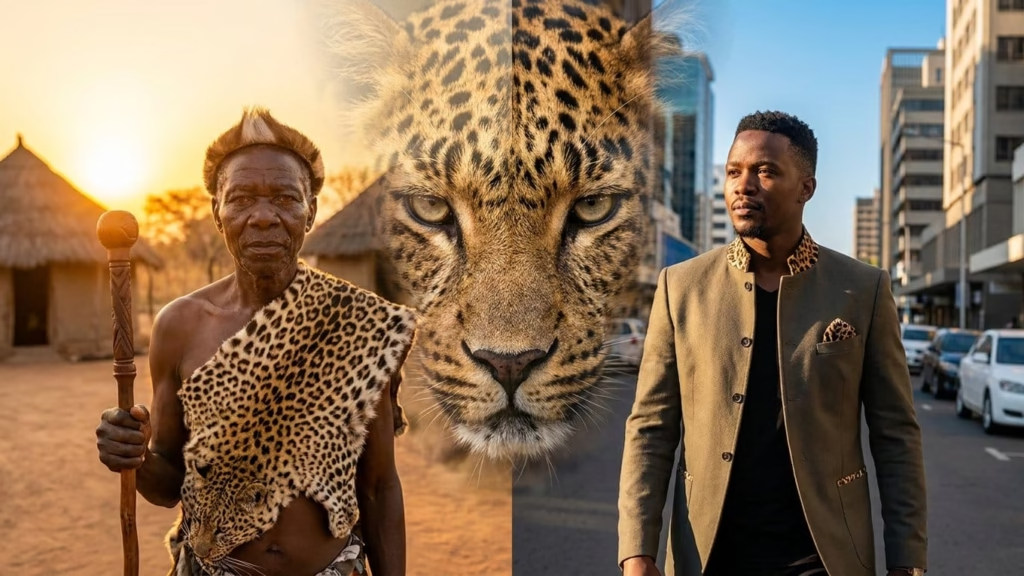
In fact, before the colonial era, the concept of a single “Shona nation” didn’t exist. Today, we are playing historical detective and going back before the name was ever popularized to answer a simple question: Who were the people before the label, and where did the word “Shona” actually come from?
Tiri Vanhu: Who Were the People Before the Name?
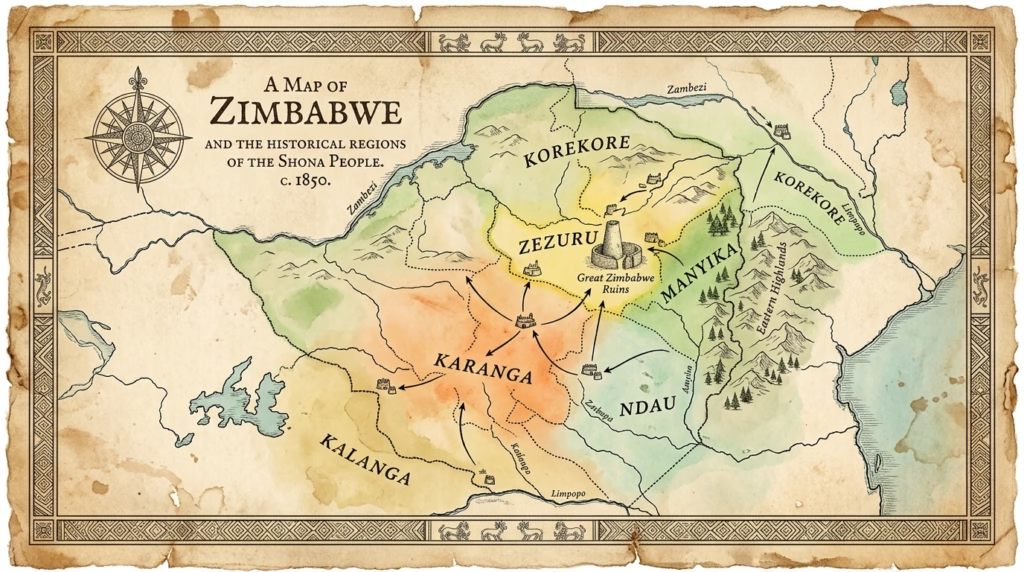
Before colonial administrators arrived, there was no single umbrella term for the people living in what is now Zimbabwe. Instead of one massive ethnic group, people identified with smaller, tightly-knit groups defined by their region, royal house, dialect, and clan.
If you asked someone their identity a few hundred years ago, you would hear names like:
Karanga
Manyika
Zezuru
Korekore
Ndau
Kalanga
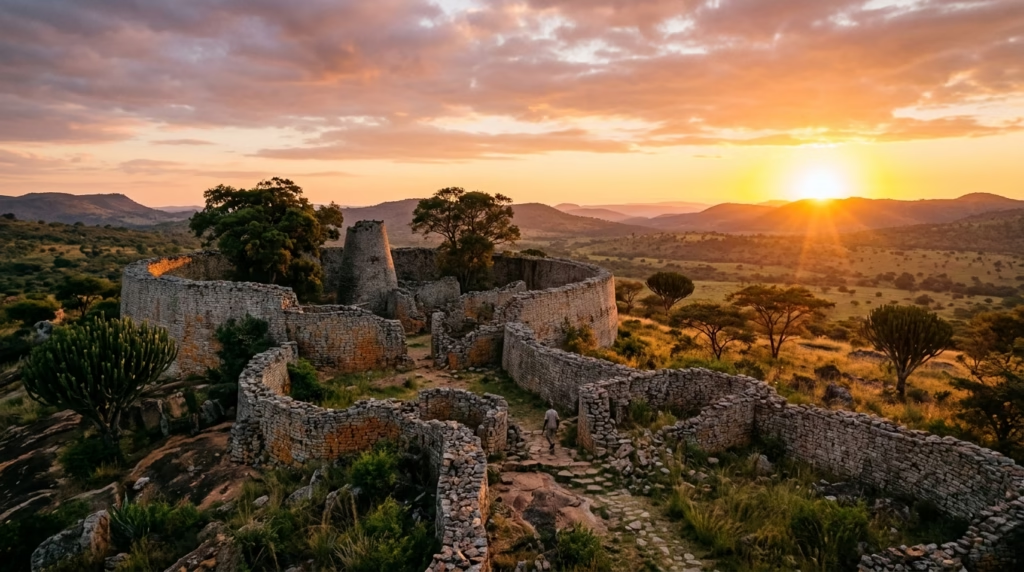
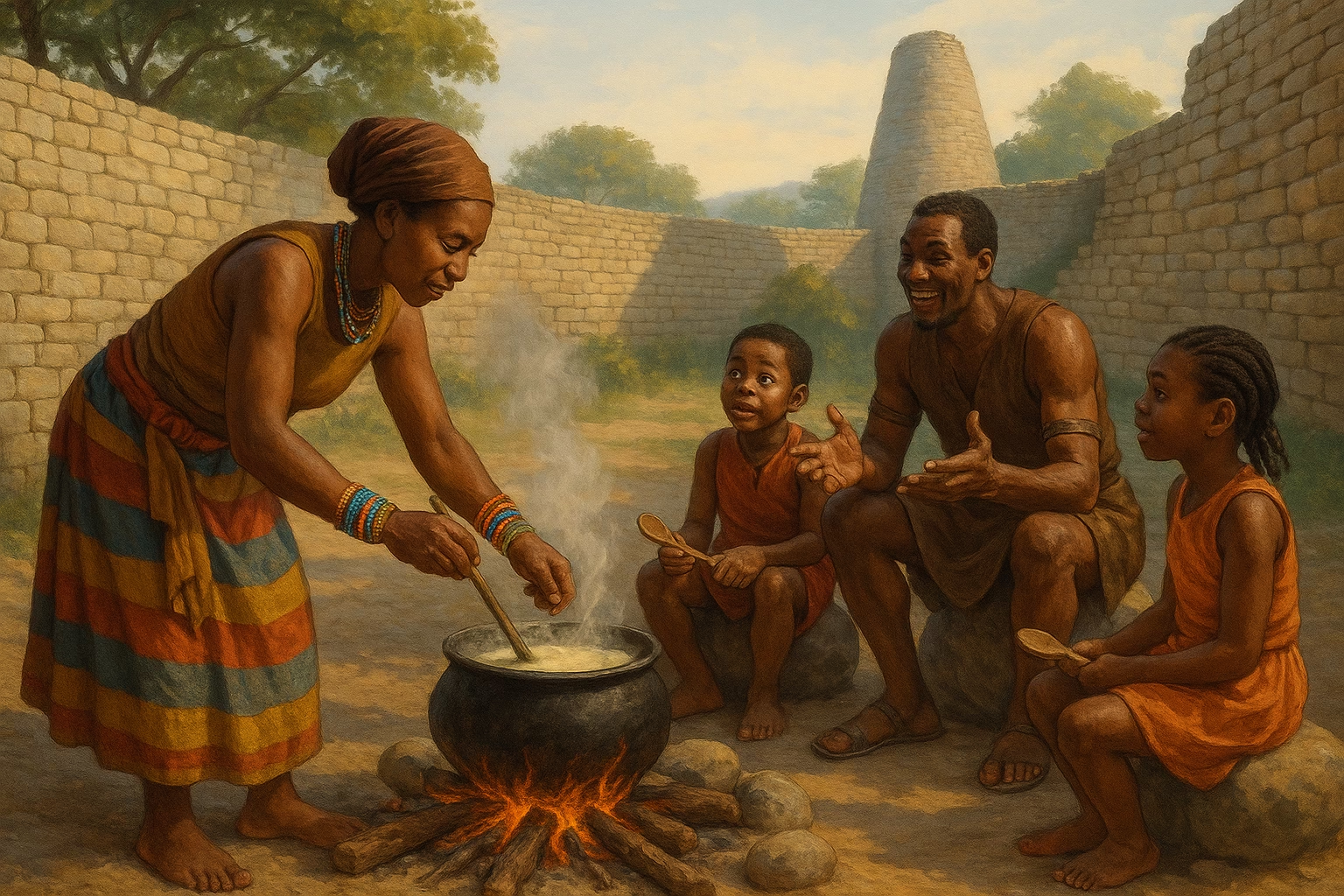
These weren’t just “dialects” in the modern sense. They were sovereign identities, deeply tied to specific kingdoms, chiefs, and ancestral lands. The culture and bloodlines were ancient—tracing back to the builders of Great Zimbabwe and the mighty Kingdom of Mutapa.
When these groups needed a broader term to describe themselves collectively, some historical accounts suggest they simply used the phrase Tiri Vanhu—meaning, “We are people.” Their shared, mutually intelligible language was simply called Chivanhu (the language of the people).
Not a tribe name. Not a nation name. Just a human collective.
4 Competing Theories: How the Word “Shona” Was Born
If the ancestors didn’t use the word, who invented it? Historians and linguists actually disagree on its exact origins, leaving us with four fascinating theories.
1. The Ndebele Theory (The “Defeated” Origin)
This is the most widely taught theory in Zimbabwe. It suggests the word came from the Ndebele people during the conflicts of the 19th century. According to this version, the Ndebele used the word ukutshona—meaning “to sink” or “to go down”—to describe the groups they defeated in battle (particularly the Rozvi). Under this theory, the name began as a military insult to describe a subjugated people, which is why the original inhabitants didn’t use it themselves.
2. The “Sunset” Theory
Another geographical theory traces the name to the Kalanga word Ntshonalanga, which translates to “where the sun sets” (the west). It was originally used to describe the western territories of the region. Over time, European settlers and explorers corrupted this term into “Mashonaland.”
3. The Ancient Maps Theory (Older Than the Wars)
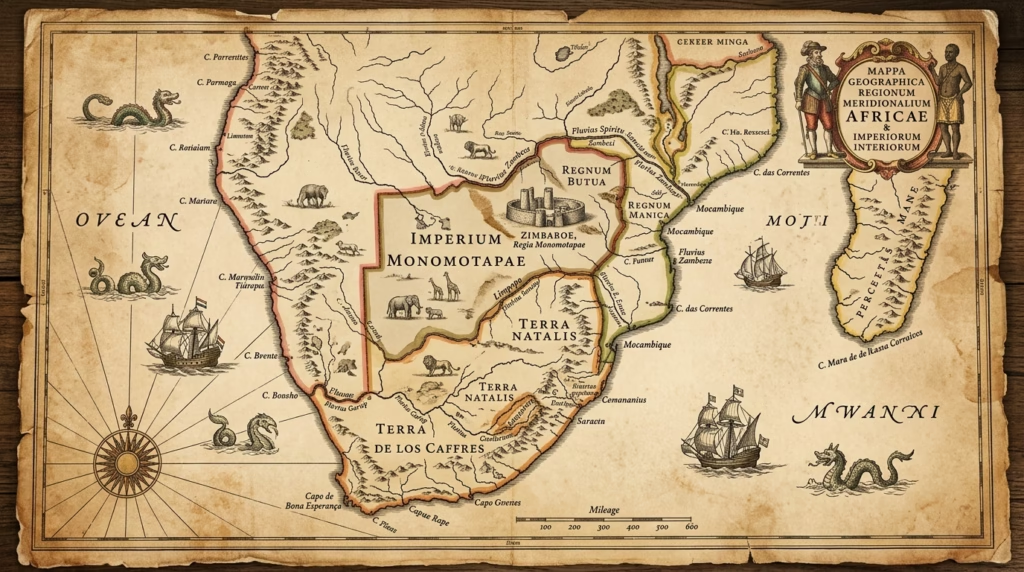
This theory completely disrupts the famous Ndebele story. Some historians point to old European maps and Portuguese travel journals from the 1600s and 1700s that clearly use words like Sajona, Soyouna, and Matshone to describe the people of this region.
Why is this huge? Because these maps were drawn long before the Ndebele arrived in the 1830s. If these records are accurate, the name “Shona” existed centuries earlier than the “insult” story claims.
4. The Gold Trade Theory
Perhaps the most unusual theory links the name to the ancient Indian Ocean trade networks. For centuries, the region was famous globally for its gold. In Hindi, Gujarati, and Punjabi, words like sona and sohna mean “gold” or “beautiful.” Some scholars suggest early traders used this term to describe the gold-rich inland empires, and the name stuck.
The 1931 Doke Report: How “Shona” Became Official
Regardless of whether the word came from ancient gold traders, Ndebele warriors, or old Portuguese maps, historians agree on one major fact: “Shona” was not used as a unified identity until the 20th century.
The turning point was the early 1900s, driven by colonial administrators and Christian missionaries who needed a way to easily govern, tax, and educate the local population. To do this, they needed one standardized language and one simple name.
Enter the 1931 Doke Report.
Led by linguist Clement Doke, this official commission took all the distinct dialect groups—the Karanga, Zezuru, Manyika, and others—merged them into a single standardized language for schools and administration, and officially locked in “Shona” as the blanket name for both the language and the people.
Just like that, a diverse network of ancient kingdoms was bundled under a label that is, at most, 150 to 200 years old.
Why Knowing This History Matters Today
This history is not about discarding the name “Shona.” Today, it is an identity that millions of people carry with fierce pride, representing a beautiful, rich, and vibrant modern culture. That shared modern identity matters deeply.
However, names carry history. Knowing that your ancestors defined themselves not by an outsider’s label, but by their clan, their kingdom, and simply by being Vanhu (people), changes how you view the past. The culture is ancient; the label is recent. Sometimes, understanding where your name came from tells you just as much about who you are as the name itself.
Did your grandparents or family elders use a different name for themselves before “Shona” became the standard? Share your family’s oral history and let’s keep the true history of Chivanhu alive in the comments section below.
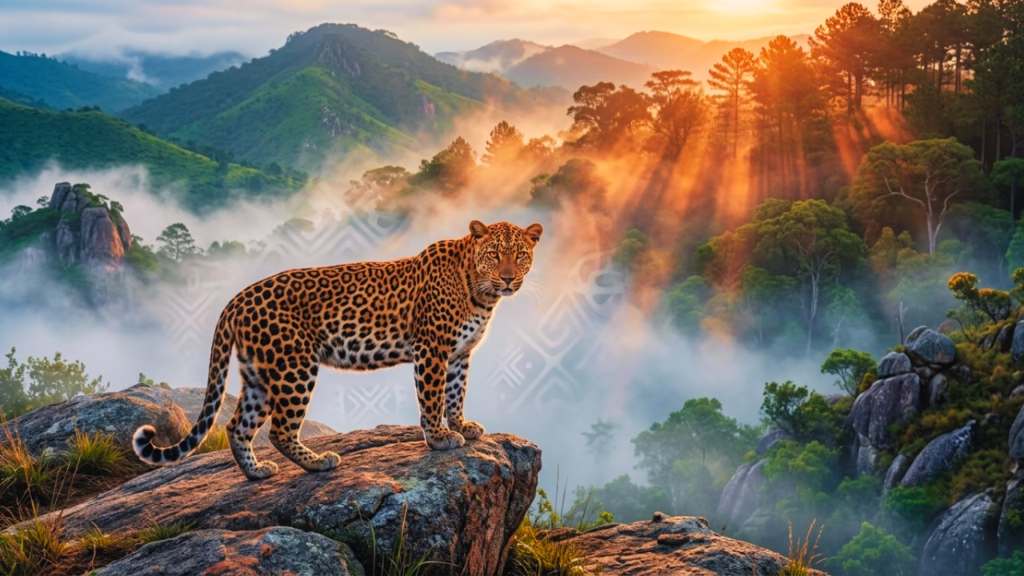
In the misty highlands of Zimbabwe, where ancient forests whisper secrets and shadows move with purpose, one creature commands silent respect — the leopard. Known as Mbada, Ingwe, or Nhewa in Shona culture, this majestic animal is far more than a wild predator. It is the living emblem of one of Zimbabwe’s most respected totems: the Mbada (Leopard) Totem, also associated with the Simboti or Nhewa clans.
This blog post explores the rich history, cultural significance, praise names, taboos, and enduring legacy of the Mbada totem. Whether you carry this totem or simply love African heritage, prepare to be inspired by its mystery and grandeur.
The Leopard: A Silent Guardian of Strength
Unlike the roaring lion, the leopard strikes without warning — agile, intelligent, fearless, and perfectly adapted to its environment. For the Shona people, these qualities made the Mbada the perfect symbol for clans that value cunning strategy, quiet resilience, and unshakable courage.
Totems (mitupo) in Shona culture are sacred links between people, ancestors, and nature. They guide identity, marriage rules, and even conservation practices. The leopard totem teaches its bearers to move with purpose and strike decisively when needed.
Ancient Origins and Migration
The story of the Mbada totem stretches back to the great Bantu migrations. As Shona ancestors journeyed southward centuries ago in search of fertile lands, they observed the natural world and chose powerful symbols for their clans.
The leopard’s ability to thrive in diverse terrains — from dense forests to rocky highlands — mirrored the adaptability of these early settlers. Many Mbada/Simboti clans eventually made their home in Zimbabwe’s eastern highlands, particularly around Nyanga, Honde Valley, Tangwena areas, Mutoko, and parts of Mashonaland East. Some trace their deeper roots to the Sena region in Mozambique.
Identity, Praise Names & Traditional Taboos
In Shona tradition, your totem is your cultural DNA. People of the same totem regard each other as family.
Common Praise Names (Zvidawo / Chidawo):
For men: Simboti, Simboti Tsoka, Chikatsa
For women: Chirukamachira Nhewa, Chiruka
When greeting or praising someone with this totem, you might hear: “Mwaita Nhewa, Ingwe ina mavara… Simboti, Chiruka, Nyakuzvibatira, Chikatsa…”
This beautiful praise poetry celebrates the spotted leopard that moves like wind and strikes with precision.
Important Taboos:
It is forbidden to hunt, kill, eat, or use leopard skin. Doing so is believed to bring misfortune.
Marriage within the same totem is traditionally avoided (considered like marrying a relative).
These rules have helped protect wildlife and maintain strong social bonds for generations.
Rise of Kingdoms and Historical Role
Mbada clans played vital roles in Shona societies, especially in the eastern regions. Dynasties such as the Tangwena rose in the highlands, embodying the leopard’s strategic strength. While not always at the center of empires like Mutapa, these clans contributed to governance, defense, trade, and cultural preservation across Zimbabwe.
The Mbada totem has produced leaders known for quiet but unbreakable resolve. The most celebrated example is Chief Rekayi Tangwena (Nhewa/Simboti totem), a national hero who fearlessly resisted colonial land grabs in the 1960s–70s. He protected his people’s ancestral lands and supported the liberation struggle, becoming a symbol of dignity and courage.
Today, bearers of the Mbada totem continue to excel in leadership, community development, arts, and professional fields — carrying forward the leopard’s spirit of resilience and intelligence.
Manicaland Province (Nyanga, Honde Valley, Tangwena, Rusape)
Mutoko and surrounding Mashonaland East areas
Scattered across Harare, Mutare, and other urban centers
Wherever they are, they maintain deep pride in their heritage through family gatherings, ceremonies, and oral traditions.
Reflection: The Leopard’s Timeless Lesson
As the leopard disappears into the shadows at dawn, it leaves behind a powerful message: true strength does not always roar — sometimes it moves in silence, observes wisely, and acts with precision.
In a fast-changing world, the Mbada totem reminds us to stay adaptable, protect what matters, and face challenges with courage and grace.
What’s your totem? Share in the comments below — and if you carry the Mbada spirit, let us know what it means to you!
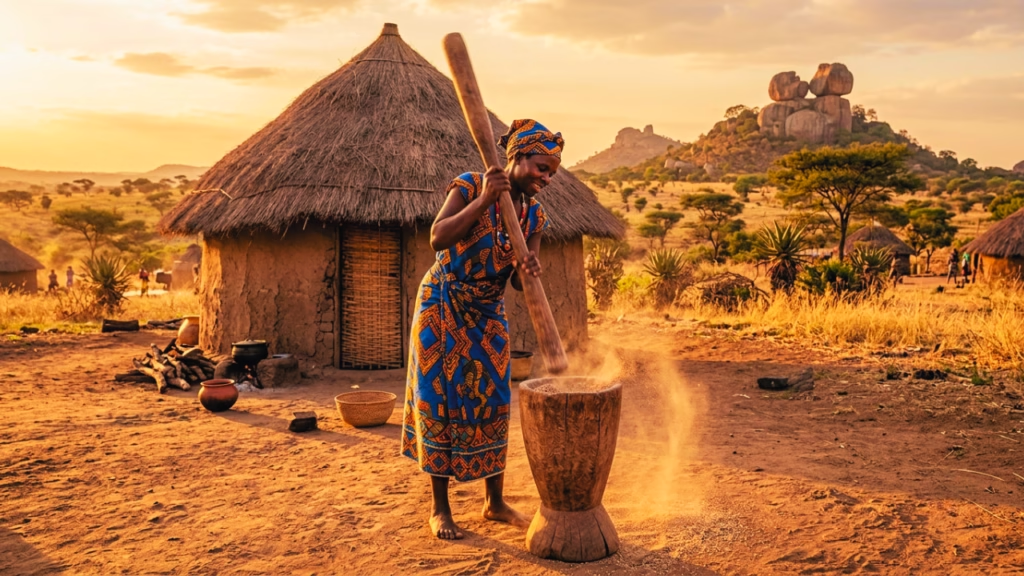
Before the 16th century, the kitchen was the center of life, but it looked very different from the modern setups we see today. There were no stoves; everything happened over an open fire, known as moto.
The Tools: Mothers and grandmothers used large, handmade clay pots (hari) for boiling and simmering stews. To turn grains into flour, they used a duri (a large wooden mortar) and a mutswi (a heavy wooden pestle). This rhythmic pounding was the soundtrack of every village.
The Original Grains: Before corn arrived, the Shona cultivated drought-resistant grains like sorghum (mapfunde) and millets (zviyo and mhunga). These were crushed and cooked into thick, hearty porridges.
Foraging for Survival: The diet was supplemented by nature. This included wild leafy greens (muriwo), wild mushrooms (hohwa), water-storing yams (madhumbe), and highly nutritious insects like mopane worms (madora).
A Note on Protein: Because cattle and goats were symbols of wealth and used for bride-price (roora), meat was rare. Protein mostly came from wild game, small birds, termites, and river fish.
The Great Shift: The “Corn Revolution”
In the 1600s, Portuguese traders and explorers arrived, bringing with them a “Columbian Exchange” that changed Shona cooking forever.
The Rise of Maize: Corn (chibage) was introduced to the region. Because it was easier to pound and offered higher yields than traditional millets, it was rapidly adopted.
The Peanut Influence: Traders also brought peanuts (nzungu). This became a cornerstone of Shona flavor, used to create rich, nutty pastes and sauces like dovi (peanut butter stew).
Colonial Influence: Bread, Tea, and Modernity
During the colonial era, British customs left a mark on the daily Zimbabwean diet.
Breakfast Staples: Sweet, milky tea and white bread became common, especially in urban areas.
New Techniques: The British influence introduced canning and modern baking, shifting some traditional kitchen practices.
Modern Shona Cuisine: Staples You Must Know
Today, the legacy of these centuries is visible in every Zimbabwean kitchen. If you visit, you will likely encounter:
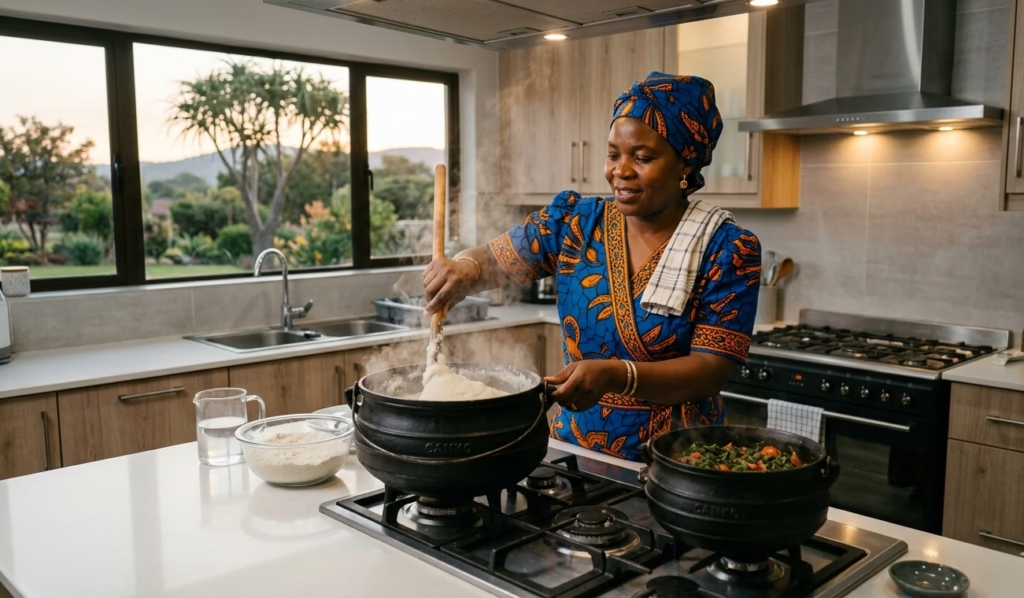
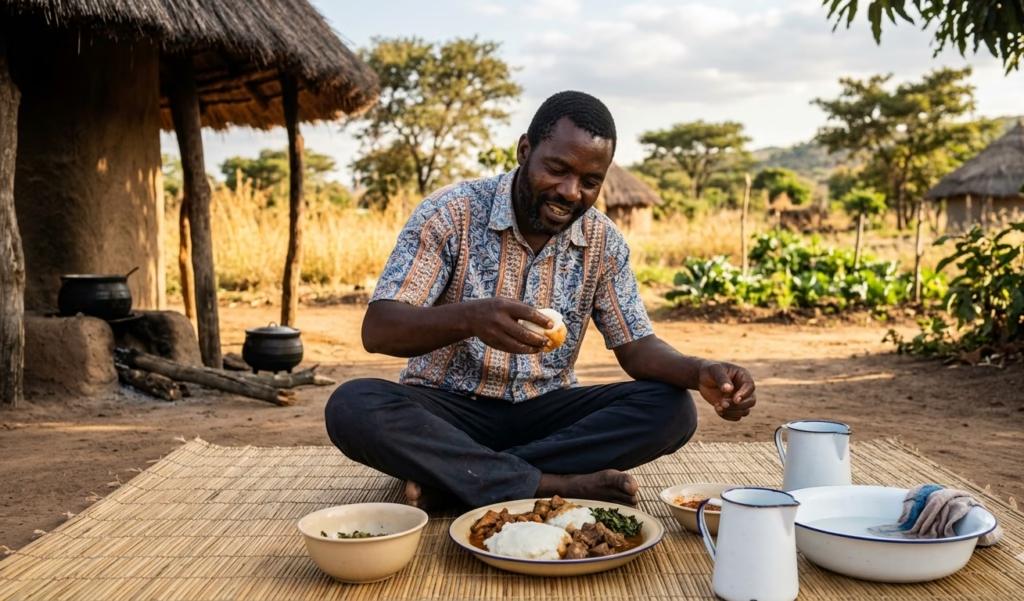
Sadza: The modern iteration of ancient porridge. Made from finely ground white maize meal (upfu) and water, it is cooked into a dense, stiff consistency and eaten at almost every meal.
Relish (Muriwo ne Nyama): Sadza is never eaten alone. It is paired with a “relish”—usually stewed beef, chicken, or pork, or sautéed greens like rape or pumpkin leaves, often enriched with a spoonful of peanut butter.
Traditional Drinks: Fermented grain beverages like maheu (non-alcoholic) and traditional beers (chibuku) are still brewed to celebrate harvests and communal gatherings.
Cultural Etiquette
Shona food is more than sustenance; it is a display of values.
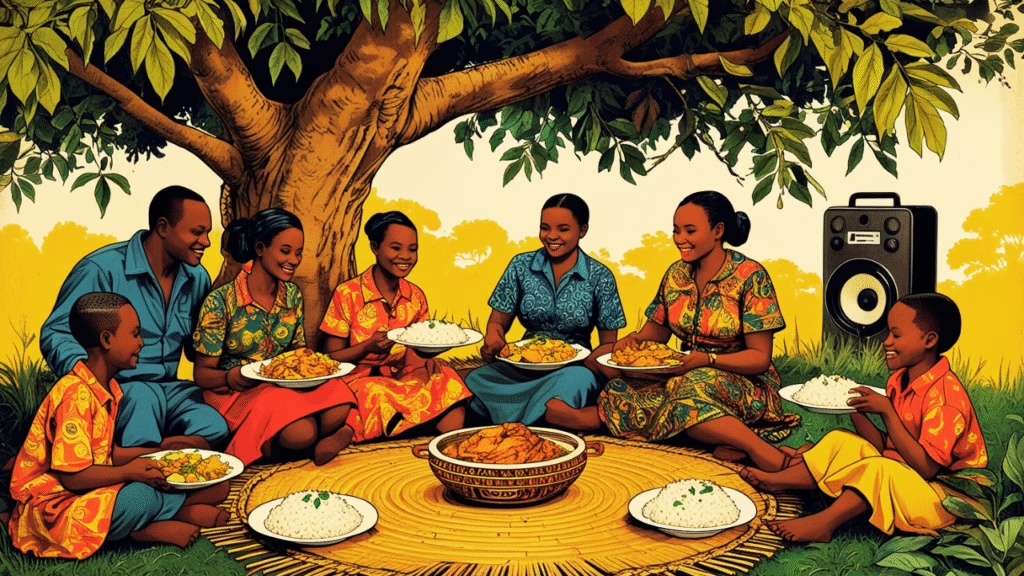
Communal Dining: Families sit in a circle, and everyone eats from a shared bowl. This fosters fairness, unity, and connection.
The Right Hand (Rudyi): You roll a portion of sadza into a ball and use it to scoop your meat or veggies. It is culturally taboo to use the left hand for eating.
Totems (Mitupo): Ancestry is sacred. The Shona traditionally do not eat the meat of the animal that represents their clan’s totem—a sign of deep respect for their family identity.
1. Is Sadza just cornmeal mush? Think of it as the ultimate comfort food. It’s cooked until stiff enough to form into a ball with your hand. Its mild flavor makes it the perfect “spoon” for savory stews and greens.
2. Why can’t you eat your totem animal? In Shona culture, your totem (mutupo) represents your ancestors. Eating that animal is considered disrespectful to your heritage—it’s like eating a family member.
3. Are insects really a standard food? Yes! Mopane worms (madora) are a delicacy. They are packed with protein and, when dried and cooked with onions and tomatoes, have a nutty, chewy texture that is highly prized.
4. Why is it rude to eat with the left hand? In many Southern African cultures, the left hand is reserved for personal hygiene. The right hand is used for eating to maintain cleanliness and show respect for the communal bowl.
5. Is traditional Shona food very spicy? Generally, no. Shona cuisine relies on natural, earthy flavors. You won’t find heavy chili heat; instead, the focus is on the richness of peanuts, the freshness of garden greens, and the depth of well-cooked meats.
What about you? Have you ever tried sadza or dovi, or perhaps you have a cultural food tradition that feels like a “culinary anchor” in your own life?
If you spend time with Shona people, one question you may hear often is: “What is your totem?” This is not just small talk. It is a question about identity, history, and belonging.
Totems, known as mitupo in Shona, are one of the most important parts of Shona culture. They connect people to their ancestors, guide social behavior, and help define family relationships. Even today, in both rural and urban life, mitupo continue to shape how people relate to each other.
But where did this system come from, and why has it lasted for so long?
The Ancient Origins of Mitupo
The exact time when mitupo began is not known. This is because the system existed long before written history. Like many African traditions, it was passed down through oral storytelling from one generation to the next.
However, historians believe that totems may have developed during the Early Iron Age (around 300–1000 CE) or even earlier. This was during the time when the ancestors of the Shona people were settling in southern Africa.
The Shona are part of the larger Bantu-speaking family, and many Bantu cultures across Africa use similar totem systems. This suggests that mitupo may have come with early migrations and then developed further over time in Zimbabwe.
How Migration Shaped Totems
Around 2000 years ago, Bantu-speaking groups migrated from Central and West Africa into southern Africa. As they settled, they built farming communities, raised livestock, and formed structured societies.
With growing populations came the need for:
Identity
Order
Social rules
This is where mitupo became essential.
Totems helped people understand who they were, who they could marry, and how they were connected to others. In simple terms, mitupo became a social system that held communities together.
Why Totems Were Created
Totems were not random. They were created to serve clear and practical purposes in society.
1. To Control Marriage
One of the most important roles of mitupo is to regulate marriage. In Shona culture, people are not allowed to marry someone with the same totem.
This rule, called exogamy, helps prevent close relatives from marrying each other. It also encourages relationships between different families and clans, strengthening unity.
Even if two people have never met before, sharing the same totem means they are considered family.
2. To Honor Ancestors
Mitupo are deeply connected to ancestral worship, which is central in Shona culture.
Each totem is linked to a founding ancestor. These ancestors are believed to guide and protect their descendants.
Because of this, totems are treated with great respect. They are not just symbols—they represent a living connection between the past and the present.
3. To Organize Society
Totems also help organize society into clans and family groups.
Each clan has:
Its own totem
Its own history
Its own identity
This makes it easier to understand relationships and maintain order within the community.
Who Created the Totem System?
There is no single person who created mitupo. The system developed slowly over many generations.
As different groups settled in different areas, they formed clans. Each clan adopted a totem, often based on animals or symbolic meanings.
Some common Shona totems include:
Shumba (Lion) – strength and leadership
Nzou (Elephant) – power and wisdom
Mhofu (Eland) – gentleness and grace
These were not random choices. They reflected qualities that each clan valued or identified with.
Totems in the Great Zimbabwe Era
By the time of the Great Zimbabwe civilization (11th–15th centuries), mitupo were already well established.
Great Zimbabwe was a powerful and organized society. It had strong leadership, trade networks, and social systems. Totems played an important role in maintaining this structure.
During this time, mitupo helped with:
Identity – showing which clan someone belonged to
Social order – helping define roles in society
Marriage rules – preventing incest
Unity – connecting different families across the kingdom
This shows that the totem system was not only cultural but also political and social.
Totems and Everyday Identity
Even today, mitupo are part of daily life.
Each totem is linked to a praise name, called a chidao. These are used in greetings, ceremonies, and formal situations.
For example:
Shava (Eland) is often associated with Mhofu
Moyo (Heart) is associated with Ndizvo
Using someone’s totem or praise name is a sign of respect. It shows that you recognize their ancestry and identity.
Cultural Rules and Respect
Totems also guide behavior.
People are expected to respect their totem and avoid actions that may dishonor it. In some cases, this includes not eating the animal linked to their totem.
There are also strong cultural expectations around:
Respecting elders
Greeting properly
Understanding family connections
All of these are influenced, directly or indirectly, by the totem system.
Why Mitupo Still Matter Today
In a fast-changing world, mitupo continue to give people a sense of identity and belonging.
They remind people of:
Where they come from
Who their ancestors are
How they are connected to others
For many Shona people, knowing your totem is just as important as knowing your surname.
Even younger generations, growing up in cities or abroad, often return to their totems as a way of reconnecting with their roots.
Final Thoughts
Mitupo are more than cultural symbols. They are a system that has shaped Shona society for centuries.
Even though we do not know exactly when they began, their purpose is clear. They were created to:
Organize society
Regulate marriage
Strengthen relationships
Honor ancestors
Today, they remain a powerful link between the past and the present.
In the end, mitupo are not just about identity—they are about connection. Connection to family, to history, and to something much bigger than oneself.
A Look at Christmas Traditions and Shona Culture. Life in Zimbabwe is rich in culture, family values, and strong community ties. One of the best ways to understand the Zimbabwean lifestyle is by looking at how people celebrate Christmas. This holiday is a big event across the country and offers a real glimpse into the heart of Zimbabwean traditions, especially among the Shona people.
Christmas in Zimbabwe: A Time for Family and Joy
Christmas in Zimbabwe is more than just a religious celebration—it’s a time when the whole country comes together. People from all walks of life join in the joy. Whether they live in the city or the rural areas (called kumusha), Zimbabweans prepare for this special time of year with excitement.
Many families plan for Christmas months in advance. It’s a national holiday, so most people get time off work. This makes it easy for everyone to take part in the celebrations. Some people travel from the cities to their rural homes to be with extended family, while others stay in town. Either way, Christmas is a time to relax and reconnect with loved ones.
A National Holiday That Brings Everyone Together
Christmas is officially recognized as a public holiday in Zimbabwe. It brings together both Christians and non-Christians. While not everyone may celebrate in the same way, most Zimbabweans mark the occasion with gatherings, food, and joy. Family unity is a strong value in Zimbabwean culture, and Christmas is one of the best times to see this in action.
How Zimbabweans Celebrate Christmas
The main day is December 25. On Christmas morning, many Christians attend church services to celebrate the birth of Jesus Christ. They sing Christmas carols and give thanks. After church, families gather at home to enjoy food, give gifts, and spend time together.
Preparations begin well before Christmas Day. People shop for new clothes, food, and presents. Dressing up is an important part of the celebration. In fact, for some people, Christmas is the only time of year they wear new clothes. Parties are full of music, dancing, and laughter—a true display of Zimbabwean spirit and joy.
Together – Lovely!
How Zimbabweans Celebrate Christmas: Food, Music, and Togetherness
In Zimbabwe, Christmas is all about sharing. On this day, it’s common for people to visit friends, neighbours, or relatives—sometimes just to say “Merry Christmas,” have a snack, or enjoy a short chat. Hospitality is a big part of Zimbabwean Christmas traditions. Homes are open to visitors, and it’s normal to prepare extra food, just in case guests stop by.
Sharing food is a key part of Zimbabwean culture, especially during Christmas. Families often prepare large meals to enjoy with guests. The most popular Christmas dish is rice and chicken. Some people cook turkey, while others—especially those hosting big family gatherings—may prepare traditional meals by slaughtering a goat or cow. These feasts are the highlight of the day!
Christmas Music and Celebrations
After the big meal, it’s time to party! Zimbabweans love music, and Christmas is the perfect excuse to turn up the volume. People bring out their big speakers and play their favourite songs—usually energetic and fun music, not necessarily religious. Dancing, singing, and celebrating with family and friends is how many choose to enjoy the rest of the day.
Decorations and Santa Claus
While some families decorate their homes for Christmas, it’s not the main focus. In Zimbabwe, togetherness and quality time matter more than decorations. The idea of Father Christmas (Santa Claus) exists, especially for young children. Many believe he brings gifts early on Christmas morning, but it’s not as big a tradition as in Western cultures.
Why Christmas Is the Most Popular Holiday in Zimbabwe
Christmas is the most celebrated holiday in Zimbabwe. Almost everyone takes part, regardless of religious background. It’s a time for family reunions, rest, and celebration.
Many Zimbabweans have two homes—one in the city and one in the rural areas (kumusha). This comes from colonial times when men had to work in cities while families remained in villages. Today, that tradition still lives on, and during Christmas, most people travel to the countryside to be with their families.
Family Reunions and Year-End Bonuses
Christmas is a time when businesses often close, giving people a chance to travel and spend time with loved ones. It’s also common—though not legally required—for companies to give Christmas bonuses as a thank-you to their workers. This makes the season even more joyful and allows families to celebrate in style.
During family gatherings, many Zimbabweans enjoy a barbecue (locally called “braai”) where goat or beef is roasted over an open fire. These meals are more than just food—they’re a celebration of culture, connection, and tradition.
While celebrations may vary slightly depending on where you are in Zimbabwe, the heart of Christmas remains the same: joy, family, music, and food.
Final Thoughts
We hope this gives you a clear picture of how Christmas is celebrated in Zimbabwe, especially among the Shona people. If you have any questions or would love to share your experience, feel free to leave a comment below. We’d love to hear from you!
Zimbabwe is carrying out several large-scale infrastructure projects. These developments aim to strengthen the economy, improve public services, and support long-term growth.
The projects cover sectors such as energy, transport, water supply, urban development, aviation, and technology.
As of 2026, many of these initiatives are in progress or have seen recent advances. They form part of the country’s strategy to address infrastructure gaps and increase regional connectivity. Below is an overview of 10 major projects.
1. Hwange Power Station Expansion and Rehabilitation
Hwange Power Station is Zimbabwe’s largest coal-fired power plant. Recent work added new units that increased generation capacity by 600 MW. In late 2025, the government approved a $455 million rehabilitation project for older units in partnership with Jindal.
Work is scheduled to begin in 2026 and is expected to add around 400 MW over four years.
The project seeks to reduce electricity shortages, support industrial operations, and improve overall energy supply. Zimbabwe’s power demand is approximately 2,000 MW, and reliable generation remains a key priority.
2. Zimbabwe Urban Renewal Project
This initiative focuses on upgrading infrastructure in major cities. It includes improvements to housing, public services, roads, and utilities.
Plans also involve developing satellite towns to manage urban growth, including areas linked to tourist sites such as Victoria Falls.
The project aims to create more balanced urban development and address overcrowding in existing city centers.
3. Beitbridge Border Post Modernization Project
Beitbridge is the main border crossing between Zimbabwe and South Africa. The modernization project, completed in phases around 2022 at a cost of about $300 million, introduced new terminals, wider roads, cargo scanners, and traffic separation systems.
Additional facilities in the border town include staff housing, a fire station, and a water reservoir. Clearance times for cargo have decreased, with many trucks now processed in under three hours. The upgrades support regional trade and logistics efficiency.
4. Matabeleland Zambezi Water Project (Gwayi-Shangani Dam)
This project addresses water shortages in Matabeleland. The central component is the Gwayi-Shangani Dam, which was reported at around 75% completion in early 2026. A pipeline is planned to transfer water to Bulawayo and surrounding areas.
When complete, the project is expected to supply water for domestic use, agriculture, and industry, helping to reduce drought impacts in the region.
5. Mt Hampden Smart City Project
The government is developing a new urban area at Mt Hampden, near Harare. The project includes government buildings, residential zones, commercial areas, and technology-focused infrastructure.
The new Parliament Building is located there, and planning involves international cooperation, including with Egyptian experts.
The development is intended to support decentralization, reduce pressure on Harare, and promote modern urban planning.
6. Harare Metro Rail Project
This proposed project involves constructing a light electric rail network in Harare. It aims to serve high-density suburbs and eventually connect to the international airport.
The system is designed to improve public transport, reduce road congestion, and enhance mobility in the capital.
Planning continues as part of broader urban transport improvements.
7. Robert Gabriel Mugabe International Airport Expansion
The main international airport in Harare is undergoing upgrades. These include terminal improvements, new air bridges, apron expansions, runway works, and enhanced facilities.
Recent efforts also cover the domestic terminal, with plans for a secondary runway and cargo terminal.
The expansions seek to increase passenger and cargo capacity and position the airport as a regional hub for aviation and trade.
8. Zimbabwe Roads and Highways Development Programme (including Trabablas Interchange)
A nationwide programme is underway to rehabilitate and upgrade roads. Key routes include Harare–Bulawayo, Harare–Mutare, and Harare–Masvingo–Beitbridge. In 2026, over 20 major road projects are planned, such as Harare-Nyamapanda, Harare-Chirundu, and various bypasses.
A notable project in Harare is the Trabablas Interchange (formerly known as Mbudzi Interchange). This major road interchange is designed to ease traffic congestion at a busy junction and improve flow in the capital’s road network. It forms part of the Greater Harare road development efforts.
The overall programme aims to improve road safety, facilitate the movement of goods and people, and support economic activity across regions.
9. Kariba South Power Station Expansion Project
This hydroelectric project added 300 MW (two units) to the Kariba South Power Station. It was completed in 2018 and raised the station’s total capacity to 1,050 MW. The expansion has contributed to national electricity supply since commissioning.
It remains an important part of Zimbabwe’s hydropower generation alongside other energy initiatives.
10. Zimbabwe Cyber City Project
Located in Mt Hampden, this mixed-use development includes residential, commercial, government, hotel, and industrial zones. It incorporates technology infrastructure and aims to promote innovation while helping to decongest Harare.
The project forms part of the broader Mt Hampden development and seeks to support digital economy growth and investment.
In A Nutshell
These projects reflect ongoing efforts by Zimbabwe to develop its infrastructure across multiple sectors. Energy, water, transport, and urban initiatives are central to addressing current needs and supporting future economic activity. Progress varies by project, with some completed, others advancing, and several in planning stages.
Developments in these areas are likely to influence investment, trade, and living conditions in the coming years. For those following Zimbabwe’s infrastructure and economic trends, these megaprojects provide key points of reference.
Hostinger webhosting is ideal for personal, business, and eCommerce sites. A free domain, business email, and site migration are included. Enjoy weekly auto backups for easy data recovery.
More Than Words: Why I am Proud of My Zimbabwean Accent
Did you know Zimbabwe boasts a staggering 16 official languages? Among them, English is widely spoken across the country. But here’s the fascinating part—our Zimbabwean English accent carries something much deeper than just words.
Have you ever wondered why people around the globe speak English with such vastly different accents? The exact same phenomenon happens right here in Zimbabwe. But our accent isn’t just a byproduct of geography; it reflects our history, our roots, and our rich cultural identity.
The Connection Between Shona Dialects and the Zimbabwean Accent
Within Zimbabwe, the Shona language alone has multiple distinct dialects. Interestingly, the specific dialect you grow up speaking heavily shapes how you pronounce English words. Once I made this connection, I realized something powerful:
Accents aren’t just about sound—they’re about who we are.
Each Shona dialect connects the speaker to a specific community, region, or even a single village. They serve as cultural fingerprints, completely unique to every group. When we speak English with our distinct Zimbabwean accent, we’re actually carrying living pieces of our history with us.
What Exactly Is a Dialect?
The Cambridge Dictionary defines a dialect as “a form of a language spoken in a particular part of a country, containing unique words, grammar, and expressions.”
Dialects are shaped by region, community, and social settings. For instance, the way you converse with family at home likely differs from how you speak in a corporate office or a university lecture hall.
In Zimbabwe, dialects give us a profound sense of belonging. When it comes to Shona, these dialects are incredibly rich and diverse.
The 5 Major Shona Dialects Shaping Our Voices:
Korekore (Northern Shona): Includes groups like Tavara, Budya, and Pfungwe.
Karanga: Such as Duma, Jena, and Nyubi.
Ndau: Including Garwe and Danda.
Zezuru: Groups like Shawasha, Hera, and Njanja.
Manyika: Such as Hungwe, Nyatwe, and Bvumba.
Each dialect carries its own ancestral history, stories, and linguistic cadence.
(Curious about how the Shona language was standardized and who engineered it? [Read the full history here])
Zimbabwean English: A Living, Breathing Identity
Our version of English obviously has its roots in British English, but it has been beautifully remolded by Shona, Ndebele, and other local indigenous languages. That fusion is what makes it uniquely ours.
Growing up in high school, I vividly remember how classmates who spoke with a forced, “eloquent” British or American twang were teased as the “nose brigade” (because they seemingly spoke “through their noses”). Back then, many people didn’t celebrate authentic Zimbabwean English.
Today, however, I see that our accent is something to be fiercely proud of. It is our own localized dialect of English—just as valid as the accents proudly spoken by Australians, Americans, or the Irish.
Here’s the irony: someone who alters their voice to sound “polished” in Zimbabwe might still sound completely foreign in the UK, where regional accents vary wildly from London to Yorkshire. The truth is, there is no single “perfect” English—only versions shaped by history, geography, and culture.
Why We Should Celebrate Our Linguistic Heritage
Research indicates that most Zimbabweans who speak English naturally carry phonetic influences from the Shona language (Mlambo, 2009). This explains why our vowels and consonants might sound different to an outsider’s ear. But instead of shying away from our natural intonations, we need to embrace them.
Languages and accents are meant to evolve. What matters most is that they accurately reflect our identity. As Zimbabwe’s educational curriculum begins to include more indigenous literature and languages, we are slowly returning to a place where our culture and heritage are rightfully valued.
A prime example of this positive progress is the Ndau dialect, which has recently been recognized as one of Zimbabwe’s official languages—a massive step forward in reclaiming our linguistic richness.
Accents are not flaws to be corrected; they are cultural treasures to be preserved. They tell the immediate story of where we come from without us having to explain a thing.
Your voice carries the weight of your heritage. That is something worth celebrating.
Let’s stop frowning upon the Zimbabwean English accent. Instead, let’s wear it proudly as a badge of our cultural identity.
Want to dive deeper into our rich culture? For more vivid, engaging Shona tales and cultural deep dives, [Watch our latest videos here] and don’t forget to Subscribe so you never miss an update!
Zimbabwe is a beautiful country. It is famous for the mighty Victoria Falls, amazing wildlife, and some of the friendliest people in the world. When you visit Zimbabwe, you will feel welcomed. People will smile at you, help you, and invite you into their homes.
However, every country has its own culture. Culture is the way people live, think, and act. If you are a foreigner visiting Zimbabwe or meeting Zimbabweans for the first time, you might see them do things that seem strange to you. You might get confused. This is completely normal! What is polite in one country can be rude in another country.
To help you understand this beautiful culture, we have made a list. Here are 15 things Zimbabweans do that often confuse foreigners, why they do them, and how you should react.
1. Refusing Food When They Are Actually Hungry
If you invite a Zimbabwean to your house and offer them food or a drink, their first answer will almost always be, “No, thank you.” As a foreigner, you might think, “Okay, they are not hungry,” and put the food away. This is a big mistake!
In Zimbabwean culture, it is considered greedy to say “yes” the first time someone offers you food. Children are taught from a very young age that they must politely decline at first. They want to show that they are well-mannered and not just visiting you for your food.
What you should do: You must offer the food a second or even a third time. You can say, “Are you sure? It is just a small snack.” Usually, after the second or third time, they will smile and accept. If they refuse three times, then they are truly full!
2. Greeting Elders Properly (It is More Than Just “Hello”)
In many Western countries, you can greet an older person by simply waving and saying, “Hi!” In Zimbabwe, doing this will shock people. Greeting elders is a very serious and respectful process.
When greeting an older person, a Zimbabwean will often avoid direct eye contact because staring at an elder is seen as challenging their authority. They will also use physical gestures. Men and boys will often clap their hands with hollowed palms.
Women and girls will clap with their hands crossed, and they will bend their knees in a small curtsey (called kutyora muzura). Sometimes, women will even kneel on the floor to greet an elder who is sitting down.
What you should do: As a foreigner, you are not always expected to kneel. However, you should lower your head, avoid staring deeply into the elder’s eyes, and try clapping your hands a few times while saying, “Makadii?” (How are you?). They will highly respect your effort.
3. The Strict Rules of Respect and Titles
In places like America or Europe, you might call your boss or your friend’s parents by their first names, like “John” or “Mary.” In Zimbabwe, calling an older person by their first name is extremely disrespectful.
Zimbabweans use a strict system of respect titles. Everyone is treated like family. If someone is older than you, you must use a title.
Mukoma: Older brother.
Sisi: Older sister.
Baba: Father (used for any older man).
Amai: Mother (used for any older woman).
Even if a man is just the person selling vegetables on the street, if he looks old enough to be your father, you call him “Baba.”
What you should do: Listen to how other people talk. Never use the first name of someone older than you unless they specifically beg you to. Use “Baba” and “Amai” to show that you have good manners.
4. The Three-Part Handshake
When men greet each other in Zimbabwe, a simple up-and-down handshake is not enough. They use a special, three-part African handshake.
First, they shake hands normally. Second, they slide their hands up and grab each other’s thumbs. Third, they slide back down to the normal handshake position. Sometimes, it ends with a loud snap of the fingers. It looks like a secret code, but it is just the normal way to say hello.
What you should do: Watch closely when people shake your hand. Let your hand be loose and follow their lead. After a few tries, you will be grabbing thumbs like a local!
5. Answering “How Are You?” With a Condition
In English, if someone asks, “How are you?” you say, “I am fine, thanks.” In the Shona language (the most widely spoken language in Zimbabwe), the greeting is much more communal.
Someone will ask, “Makadii?” (How are you?). The proper answer is, “Ndiripo kana muripo.” In simple English, this translates to: “I am fine, if you are fine.”
This shows the deep sense of community in Zimbabwe. A person is saying, “My happiness depends on your happiness. I cannot be truly fine if you are not fine.” It is a beautiful way to show care for another person.
6. Eating Sadza With Their Hands
Sadza is the staple food of Zimbabwe. It is a thick, white porridge made from ground maize (corn) meal. It is eaten for lunch and dinner, usually with green vegetables and meat stew.
Foreigners are often confused when they see Zimbabweans eating this hot, sticky food with their bare hands instead of forks and knives. Eating with your hands is the traditional and most delicious way to enjoy sadza!
Before the meal, someone will bring around a bowl of warm water and a towel for everyone to wash their hands. Then, you roll a small ball of sadza in your hand, make a small dent in it with your thumb, and use it to scoop up the stew and vegetables.
What you should do: Never use your left hand to eat! The right hand is the only acceptable hand for eating. Wash your hands in the provided bowl, and try eating with your fingers. The food actually tastes better this way!
7. Pointing With Their Lips
If you ask a Zimbabwean for directions, or ask them where an object is, do not expect them to point with their index finger. Pointing your finger at something, especially at a person, is considered aggressive and rude.
Instead, a Zimbabwean will often point using their lips. They will stick their lips out in a “pout” and lift their chin slightly in the direction they want you to look. To a foreigner, it might look like they are preparing to give a kiss, but they are simply showing you the way!
8. Hissing to Get Someone’s Attention
Imagine you are in a restaurant, and you hear a sharp “Tss! Tss!” sound. In many Western cultures, making a hissing sound at someone is rude. You would usually say, “Excuse me!”
In Zimbabwe, making a “Tss” sound is a completely normal and polite way to get someone’s attention. People use it to call waiters, to get a friend’s attention across a noisy street, or to stop a minibus taxi. It is sharp, it cuts through the noise, and it works perfectly.
What you should do: Do not be offended if someone hisses at you to get your attention. They are not treating you like an animal; they just want you to look their way.
9. “Now” vs. “Now Now” vs. “Just Now”
Time works differently in Zimbabwe. If a foreigner is waiting for a plumber, and the plumber says, “I am coming now,” the foreigner expects the plumber to arrive in five minutes. Three hours later, the plumber is still not there.
Zimbabweans have different categories of time:
Now: This means “sometime today.” It could be in one hour, or it could be in six hours.
Just now: This means “in the near future.” Maybe in 30 minutes, maybe in two hours.
Now now: If someone repeats the word, it means immediate urgency. “I am coming now now” means they are actually on their way and will be there in five minutes.
What you should do: Learn to be patient. Life moves at a slower, more relaxed pace in Zimbabwe. Always clarify by asking, “Do you mean now now?”
10. Drinking Hot Tea on a Boiling Hot Day
Zimbabwe has a very hot climate, especially in October and November. You would think people only want to drink cold water or ice-cold juice. But if you visit a Zimbabwean home at 10:00 AM or 4:00 PM, they will serve you boiling hot tea.
This is a mix of British colonial history and local culture. “Tea time” is a sacred ritual. Families sit together, drink strong tea with lots of milk and sugar, and eat thick slices of bread with margarine. The heat outside does not matter. The tea warms the body, but the ritual warms the soul.
11. Overfeeding Guests (The Clean Plate Trap)
In some cultures, finishing all the food on your plate means, “That was delicious, thank you!” In Zimbabwe, finishing all the food on your plate means, “I am still very hungry, please give me more!”
Zimbabwean hosts are very generous. They want to make sure you are completely full. If you eat everything, they will immediately put another large scoop of sadza and meat onto your plate. If you finish that, they will give you more. They will not let you leave their house hungry.
What you should do: When you are full, you must leave a small amount of food on your plate. This small piece of leftover food is a polite signal to the host that you have had enough to eat and your stomach is completely satisfied.
12. Having No “Cousins”
Family structures in Zimbabwe are very broad and deep. The English language has words like “cousin,” “aunt,” and “uncle.” Zimbabweans translate their family trees differently.
In traditional culture, your mother’s sister is not your aunt; she is also your “Mother” (Mainini for younger sister, Maiguru for older sister). Your father’s brother is not your uncle; he is also your “Father” (Babamunini or Babamukuru).
Because of this, the children of your mother’s sister or father’s brother are not your cousins—they are your brothers and sisters. If a Zimbabwean introduces someone by saying, “This is my brother,” they might be referring to what a foreigner would call a cousin. Family is everything, and the circle is kept very close.
13. Receiving Things With Two Hands
If you hand a Zimbabwean a gift, a pen, or even a cup of tea, they will not just reach out and grab it with one hand. Reaching for something with one hand is seen as careless and ungrateful.
Instead, they will use both hands to receive the item. Sometimes, they will reach out with their right hand to take the item, and place their left hand under their right elbow or forearm. This gesture shows deep appreciation, respect, and gratitude.
What you should do: Try to give and receive items with two hands, or support your right arm with your left hand. It is a small gesture that will make you look very polite and respectful to the local people.
14. Smiling or Laughing When Giving Bad News
This is a behavior that confuses foreigners the most. Sometimes, a Zimbabwean might smile or give a nervous laugh when telling you something sad, embarrassing, or stressful. For example, they might smile while saying, “I am so sorry, but I broke your favorite cup,” or “The bus broke down and we are stuck.”
Foreigners might think the person does not care, or thinks the bad news is funny. This is not true! In Zimbabwean culture, smiling or laughing during a stressful moment is a coping mechanism. It is a way to ease the tension, show humility, and stop the other person from getting too angry or upset. They are trying to soften the blow of the bad news.
15. The Long, Elaborate Greetings
If you bump into a friend in a supermarket in a Western country, you might say, “Hey! Great to see you. Gotta run, bye!”
In Zimbabwe, you cannot rush a greeting. A greeting is a whole conversation. You must stop what you are doing. First, you ask how they are. Then, you must ask about their family. “How is your wife? How are the children? How is work? How is the health of your parents back in the rural areas?”
Only after asking all these questions can you move on to the actual reason you are talking to them. Rushing a greeting shows that you do not care about the person’s life.
My Final Thoughts
Traveling to a new country is always an adventure. The scenery and the animals are wonderful, but the true beauty of Zimbabwe is in its people and its culture.
Yes, the culture can be confusing at first. You might wonder why someone is hissing at you, why they won’t take the food you offered, or why they are calling you “Father” when you are not related. But once you understand the reasons behind these actions, you will see that Zimbabwean culture is built on deep respect, strong community, and a wonderful sense of togetherness.
When you visit Zimbabwe, keep an open mind. Watch what the local people do. Do not be afraid to ask questions. If you try to learn their ways—if you use both hands, call elders by their proper titles, and remember to leave a little bit of food on your plate—you will not just be a foreigner anymore. You will be a welcomed friend.
The truth is, we can’t talk about life in Zimbabwe without talking about our food. Food is the beating heart of our culture, and today, I am going to share everything you need to know about Zimbabwe’s most beloved staple dish: Sadza.
In Zimbabwe, we have a beautiful Shona proverb: “Ukama igasva hunozadziswa nekudya.” Translated, it means that relationships are incomplete unless cemented by sharing a meal. We build, nurture, and celebrate our relationships by eating together.
What Makes Sadza My All-Time Favorite Dish?
If I had to choose one traditional Zimbabwean food to eat for the rest of my life, it would be Sadza served with a rich beef stew and rape (a popular, hearty leafy green in Zimbabwe).
Sadza is a thick, comforting maize porridge (African cornmeal). It is the undisputed staple food of Zimbabwe and is incredibly versatile. You can serve it with hearty stews (beef, chicken, or goat), fried vegetables, or a combination of both.
What I absolutely love about this dish is how satisfying it is. It fills you up and gives you sustained energy, keeping those midday snack cravings at bay!
The Beauty of Homegrown Ingredients
Staple foods are the foundation of a community’s diet, and the beauty of cooking Sadza is that it is both affordable and accessible. Most Zimbabweans use homegrown ingredients straight from the family garden. Fresh, organic, and bursting with flavor!
To bring out the best flavors in the beef stew and greens that accompany my Sadza, I like to keep my seasoning simple but impactful. I highly recommend adding:
Royco Usavi Mix (Beef Flavour)
Garlic and Black Pepper
Aromat Seasoning (An incredibly versatile condiment that gives a wonderful herby taste!)
As Chef José Andrés perfectly puts it: “Simple ingredients prepared in a simple way – that’s the best way to take your everyday cooking to a higher level.”
How to Cook Classic Zimbabwean Sadza
Cooking Sadza is an art form, but with a little practice, anyone can master it. Here is my foolproof guide to making the perfect, lump-free Sadza.
Prep time: 5 mins | Cook time: 25 mins | Servings: 2-4
Ingredients:
2 cups white maize meal (cornmeal, preferably super-refined “mealie-meal”)
4 cups water (plus a little extra hot water as needed)
Step-by-Step Instructions:
Prepare the Base Mixture: In a medium pot, bring 3 cups of water to a rolling boil. Meanwhile, in a separate bowl, mix 1 cup of the maize meal with 1 cup of cold water to form a smooth paste. (Pro-tip: This cold-water paste is the secret to preventing lumps!)
Start the Cooking Process: Once the water is boiling, reduce the heat to medium. Slowly pour your maize meal paste into the boiling water while stirring continuously with a wooden spoon.
Simmer: Let the mixture simmer for 5–7 minutes. It will look like a thick soup. Stir occasionally to prevent it from sticking to the bottom of the pot.
Thicken the Sadza: Gradually add the remaining 1 cup of dry maize meal. You will need to stir vigorously (we call this kumona) to avoid lumps. As the mixture thickens, if it becomes too stiff for your liking, add a little hot water (about ¼ cup at a time).
The Final Steam: Reduce the heat to the lowest setting, cover the pot with a lid, and let it cook for 10–15 minutes. The Sadza is ready when it is smooth, thick, and pulls away slightly from the sides of the pot.
Serve like a Pro: Wet a serving plate or bowl with a little water (to prevent sticking) and scoop the Sadza onto it. Use a wooden spoon or wet hands to mold it into a neat, round shape.
How to Eat Sadza Like a Local
Traditionally, Sadza is eaten with your hands—specifically, the right hand. You simply pinch off a small portion, roll it into a little ball in your palm, make a small indentation with your thumb, and use it to scoop up your delicious relish, stew, or sour milk (mukaka wakakora).
While many people use forks and knives today, eating with your hands connects you to the food and the culture in a way utensils simply can’t. In the past, families would eat from a communal bowl, reinforcing that beautiful bond of Ukama.
Delicious Variations to Try
While beef and rape are my go-to, the relishes you can pair with Sadza are endless:
Muboora (Pumpkin Leaves): A traditional, highly nutritious vegetable dish often cooked in a rich peanut butter sauce. (If you’re allergic to peanuts, a simple oil-based fry is just as tasty!)
Kidney Beans: A hearty, vegetarian-friendly protein option.
Goat or Mutton Stew: Rich, flavorful meats reserved for hearty family gatherings.
There are 16 official languages in Zimbabwe, each carrying its own unique history and worldview. If you truly want people to understand you, the age-old advice remains true: speak their language. This post focuses on one of the most vibrant aspects of Zimbabwean communication—Shona proverbs (tsumo)—exploring their purpose, meanings, and the profound wisdom they hold.
What is a Proverb, Anyway?
At its core, a proverb is a brief, popular saying that offers advice or shares a universal truth based on practical, everyday experience. Etymologically, the word comes from the Latin proverbium—a saying that supports a point.
However, as Onifade Abayomi notes in Philosophy in African Proverbs, they often carry a deeper message behind their sometimes odd or metaphorical appearances. Proverbs are widely loved because they sprinkle color and wisdom into our spoken language and folk literature. They are the ultimate expressions of a culture’s thoughts, moral codes, and heritage.
Why Proverbs Matter
Proverbs matter because they are the social glue of a community. Across many African nations, proverbs are considered a national treasure. They act as an intergenerational bridge, teaching the youth while gently reminding the elders of the foundational rules of conduct.
As noted by scholar C.L.S. Nyembezi, people within a social unit have definite ways of behaving in specific setups. Proverbs are the shorthand for these expectations. When you hear a proverb, you aren’t just hearing a sentence; you are hearing the distilled wit and practical experience of countless past generations.
I get a lot of questions from the younger generation to help them with their Shona homework, especially about proverbs (tsumo). I have compiled a list to help out. For more reading, click below.
Shona proverbs are a vital piece of the cultural heritage of the Shona people, one of Zimbabwe’s largest ethnic groups. Shona, a rich Bantu language, is filled with metaphorical expressions that reflect the customs, natural environment, and social norms of the community.
These sayings are typically brief but pack a heavy punch, conveying timeless truths about relationships, morality, and navigating life’s unpredictable moments.
The Cultural Importance of Tsumo
Shona proverbs (tsumo) are not merely linguistic artifacts; they are living, breathing expressions of a vibrant culture. They play an active role in maintaining the social fabric of the community.
The primary cultural purpose of tsumo is to educate the youth about proper standards of human conduct (Gwavaranda and Masaka, 2008). According to the late researcher Michael Gelfand, the ultimate goal of tsumo is to preserve humanity (hunhu) and prevent societal chaos (mashura).
In traditional Shona society, there is a general assumption that a person who uses proverbs skillfully deeply understands the rules of conduct. A well-spoken Shona individual can deploy an appropriate proverb to elegantly defend their actions or point of view—much like a Christian might quote a verse from the Bible. Because of this immense cultural value, tsumo are a core part of the school curriculum across Zimbabwe.
More Than Words: The Purpose of Shona Proverbs
Beyond their cultural weight, Shona proverbs serve several practical purposes in daily life:
Preservation of Tradition: They serve as custodians of history, passing down knowledge about the natural world, survival, and moral principles from the ancestors to the present day.
Communication and Teaching: Proverbs are a concise and memorable way to convey complex ideas. They are regularly used in everyday conversation, storytelling, and formal teaching settings to impart knowledge, provide guidance, and even peacefully resolve disputes.
Four Reasons You Should Learn Shona Proverbs
1. Deepen Your Cultural Appreciation Learning Shona proverbs allows you to look past the surface and gain a nuanced understanding of the Shona worldview. By grasping the context behind these sayings, you learn what the culture truly values.
2. Enrich Your Language Skills Proverbs are a fantastic tool for language learners. They offer unique insights into Shona vocabulary, grammar, and idiomatic quirks. Mastering a few proverbs can massively enhance your fluency and help you connect more authentically with native speakers.
3. Foster Cross-Cultural Empathy Engaging with the wisdom of another culture broadens your perspective. It builds empathy and fosters a greater appreciation for the diverse ways humans understand the world.
4. Spark Personal Growth The timeless wisdom tucked inside Shona proverbs has the power to inspire self-reflection. Whether it’s an aphorism about resilience, patience, or gratitude, these sayings offer incredibly valuable lessons for navigating modern life’s challenges.
Final Thoughts
Embedded within these succinct sayings is the collective soul of the Shona people. By exploring and learning from Shona proverbs, we embark on a journey of cultural discovery and personal growth. As we delve into this treasure trove of wisdom, we gain not only a window into a specific Zimbabwean culture but also a deeper understanding of the universal truths that unite us all.
My Sources
1. McArthur, T. (ed.) The Oxford Companion To The English Language [abridge edition], (New York: Oxford University Press, 1996) p.736.2.
2. Nyembezi, C. L. S, Zulu Proverbs, (Johannesburg, Witwatersrand Univ. Press, 1954).
3. Zambezia (1980), Shumo, Tsumo and Socialization* H. Chimhundu Department of African Languages, University of Zimbabwe.
4. Onifade Abayomi, Philosophy in African Proverbs.