
Urban Renewal Work Projects In Zimbabwe
Zimbabwe is carrying out several large-scale infrastructure projects. These developments aim to strengthen the economy, improve public services, and support long-term growth.
The projects cover sectors such as energy, transport, water supply, urban development, aviation, and technology.
As of 2026, many of these initiatives are in progress or have seen recent advances. They form part of the country’s strategy to address infrastructure gaps and increase regional connectivity. Below is an overview of 10 major projects.
1. Hwange Power Station Expansion and Rehabilitation
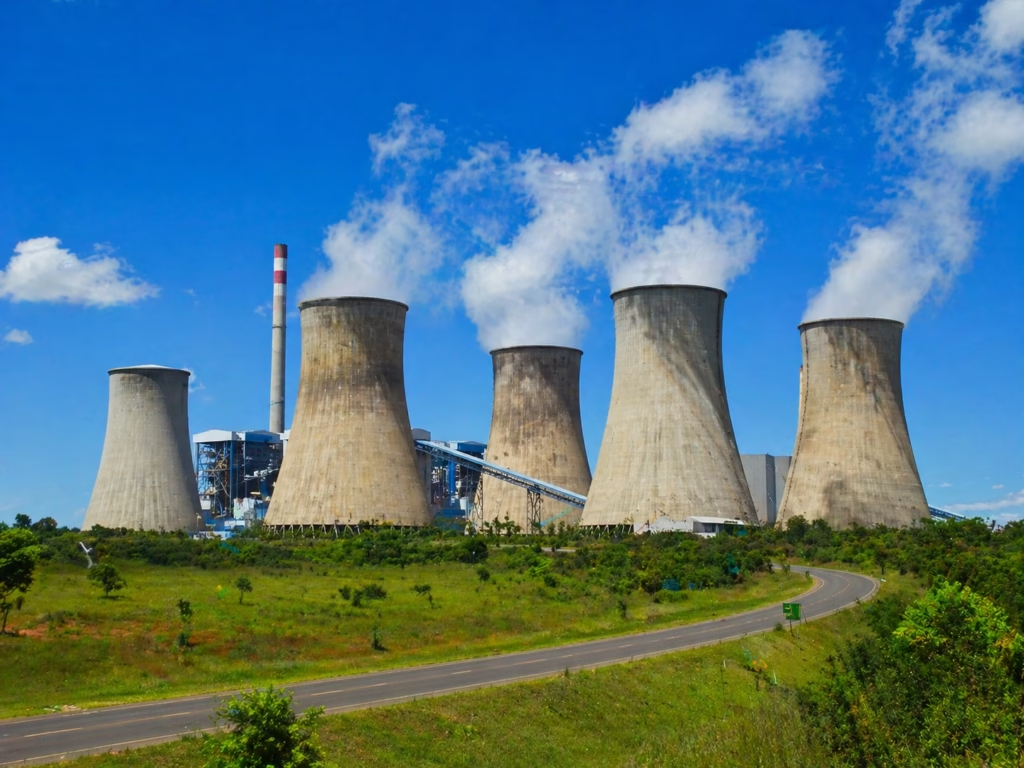
Hwange Power Station is Zimbabwe’s largest coal-fired power plant. Recent work added new units that increased generation capacity by 600 MW. In late 2025, the government approved a $455 million rehabilitation project for older units in partnership with Jindal.
Work is scheduled to begin in 2026 and is expected to add around 400 MW over four years.
The project seeks to reduce electricity shortages, support industrial operations, and improve overall energy supply. Zimbabwe’s power demand is approximately 2,000 MW, and reliable generation remains a key priority.
2. Zimbabwe Urban Renewal Project
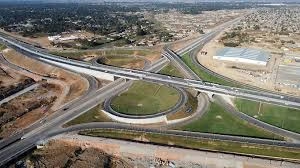
This initiative focuses on upgrading infrastructure in major cities. It includes improvements to housing, public services, roads, and utilities.
Plans also involve developing satellite towns to manage urban growth, including areas linked to tourist sites such as Victoria Falls.
The project aims to create more balanced urban development and address overcrowding in existing city centers.
3. Beitbridge Border Post Modernization Project
Beitbridge is the main border crossing between Zimbabwe and South Africa. The modernization project, completed in phases around 2022 at a cost of about $300 million, introduced new terminals, wider roads, cargo scanners, and traffic separation systems.
Additional facilities in the border town include staff housing, a fire station, and a water reservoir. Clearance times for cargo have decreased, with many trucks now processed in under three hours. The upgrades support regional trade and logistics efficiency.
4. Matabeleland Zambezi Water Project (Gwayi-Shangani Dam)
This project addresses water shortages in Matabeleland. The central component is the Gwayi-Shangani Dam, which was reported at around 75% completion in early 2026. A pipeline is planned to transfer water to Bulawayo and surrounding areas.
When complete, the project is expected to supply water for domestic use, agriculture, and industry, helping to reduce drought impacts in the region.
5. Mt Hampden Smart City Project
The government is developing a new urban area at Mt Hampden, near Harare. The project includes government buildings, residential zones, commercial areas, and technology-focused infrastructure.
The new Parliament Building is located there, and planning involves international cooperation, including with Egyptian experts.
The development is intended to support decentralization, reduce pressure on Harare, and promote modern urban planning.
6. Harare Metro Rail Project
This proposed project involves constructing a light electric rail network in Harare. It aims to serve high-density suburbs and eventually connect to the international airport.
The system is designed to improve public transport, reduce road congestion, and enhance mobility in the capital.
Planning continues as part of broader urban transport improvements.
7. Robert Gabriel Mugabe International Airport Expansion
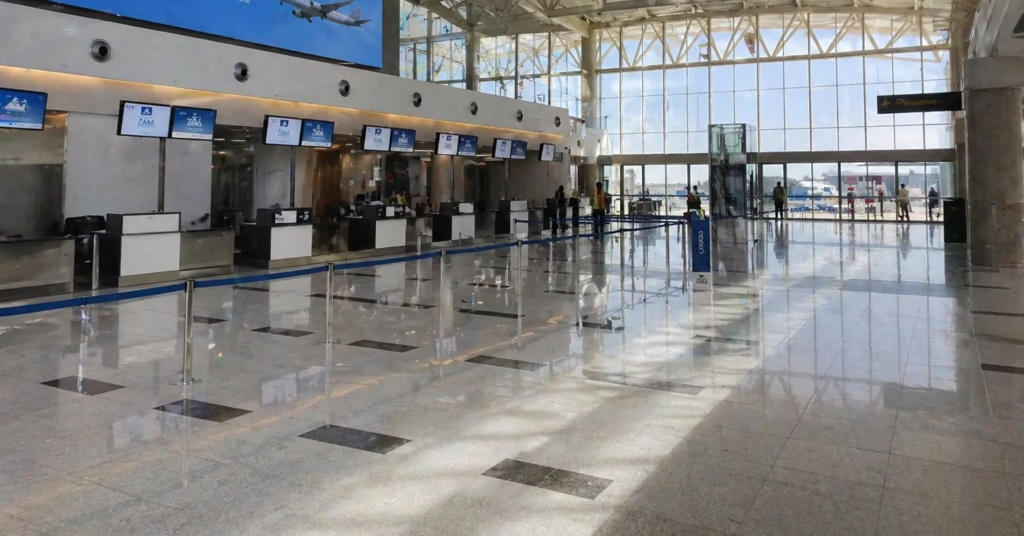
The main international airport in Harare is undergoing upgrades. These include terminal improvements, new air bridges, apron expansions, runway works, and enhanced facilities.
Recent efforts also cover the domestic terminal, with plans for a secondary runway and cargo terminal.
The expansions seek to increase passenger and cargo capacity and position the airport as a regional hub for aviation and trade.
8. Zimbabwe Roads and Highways Development Programme (including Trabablas Interchange)
A nationwide programme is underway to rehabilitate and upgrade roads. Key routes include Harare–Bulawayo, Harare–Mutare, and Harare–Masvingo–Beitbridge. In 2026, over 20 major road projects are planned, such as Harare-Nyamapanda, Harare-Chirundu, and various bypasses.
A notable project in Harare is the Trabablas Interchange (formerly known as Mbudzi Interchange). This major road interchange is designed to ease traffic congestion at a busy junction and improve flow in the capital’s road network. It forms part of the Greater Harare road development efforts.
The overall programme aims to improve road safety, facilitate the movement of goods and people, and support economic activity across regions.
9. Kariba South Power Station Expansion Project
This hydroelectric project added 300 MW (two units) to the Kariba South Power Station. It was completed in 2018 and raised the station’s total capacity to 1,050 MW. The expansion has contributed to national electricity supply since commissioning.
It remains an important part of Zimbabwe’s hydropower generation alongside other energy initiatives.
10. Zimbabwe Cyber City Project
Located in Mt Hampden, this mixed-use development includes residential, commercial, government, hotel, and industrial zones. It incorporates technology infrastructure and aims to promote innovation while helping to decongest Harare.
The project forms part of the broader Mt Hampden development and seeks to support digital economy growth and investment.
In A Nutshell
These projects reflect ongoing efforts by Zimbabwe to develop its infrastructure across multiple sectors. Energy, water, transport, and urban initiatives are central to addressing current needs and supporting future economic activity. Progress varies by project, with some completed, others advancing, and several in planning stages.
Developments in these areas are likely to influence investment, trade, and living conditions in the coming years. For those following Zimbabwe’s infrastructure and economic trends, these megaprojects provide key points of reference.

HOSTINGER WEBHOSTING
SECURE, SPEEDY, RELIABLE
Hostinger webhosting is ideal for personal, business, and eCommerce sites. A free domain, business email, and site migration are included. Enjoy weekly auto backups for easy data recovery.
The website design looks great—clean, user-friendly, and visually appealing! It definitely has the potential to attract more visitors. Maybe adding even more engaging content (like interactive posts, videos, or expert insights) could take it to the next level. Keep up the good work! Given the growing economic instability due to the events in the Middle East, many businesses are looking for guaranteed fast and secure payment solutions.
Thank you.