Zimbabwe’s Festive Season


What Is Life Like in Zimbabwe?

A Look at Christmas Traditions and Shona Culture. Life in Zimbabwe is rich in culture, family values, and strong community ties. One of the best ways to understand the Zimbabwean lifestyle is by looking at how people celebrate Christmas. This holiday is a big event across the country and offers a real glimpse into the heart of Zimbabwean traditions, especially among the Shona people.

Christmas in Zimbabwe: A Time for Family and Joy

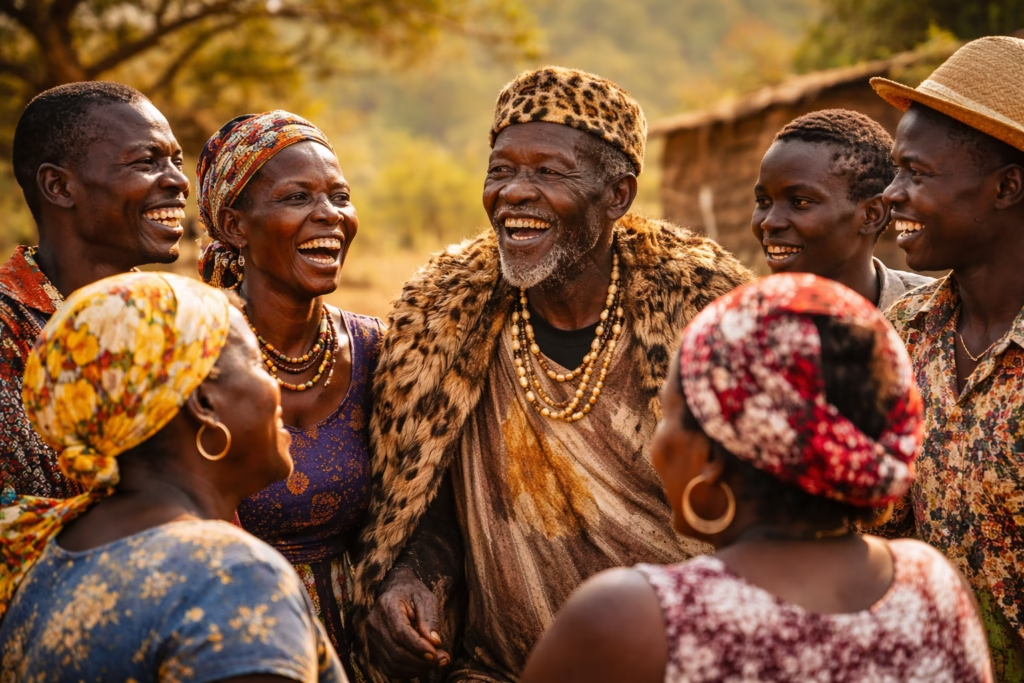
Christmas in Zimbabwe is more than just a religious celebration—it’s a time when the whole country comes together. People from all walks of life join in the joy. Whether they live in the city or the rural areas (called kumusha), Zimbabweans prepare for this special time of year with excitement.

Many families plan for Christmas months in advance. It’s a national holiday, so most people get time off work. This makes it easy for everyone to take part in the celebrations. Some people travel from the cities to their rural homes to be with extended family, while others stay in town. Either way, Christmas is a time to relax and reconnect with loved ones.

A National Holiday That Brings Everyone Together

Christmas is officially recognized as a public holiday in Zimbabwe. It brings together both Christians and non-Christians. While not everyone may celebrate in the same way, most Zimbabweans mark the occasion with gatherings, food, and joy. Family unity is a strong value in Zimbabwean culture, and Christmas is one of the best times to see this in action.

How Zimbabweans Celebrate Christmas

The main day is December 25. On Christmas morning, many Christians attend church services to celebrate the birth of Jesus Christ. They sing Christmas carols and give thanks. After church, families gather at home to enjoy food, give gifts, and spend time together.

Preparations begin well before Christmas Day. People shop for new clothes, food, and presents. Dressing up is an important part of the celebration. In fact, for some people, Christmas is the only time of year they wear new clothes. Parties are full of music, dancing, and laughter—a true display of Zimbabwean spirit and joy.

Together – Lovely!

How Zimbabweans Celebrate Christmas: Food, Music, and Togetherness

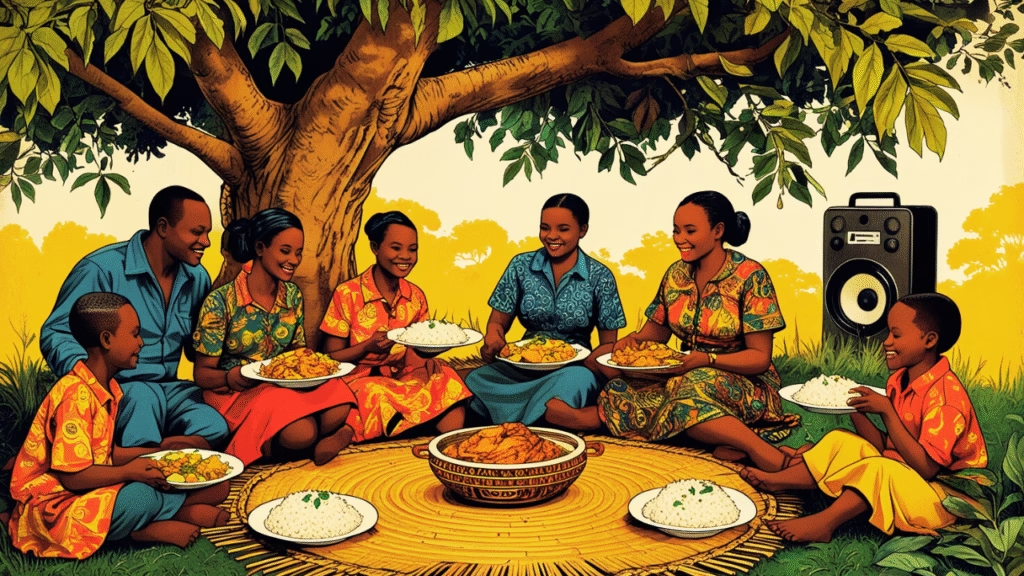
In Zimbabwe, Christmas is all about sharing. On this day, it’s common for people to visit friends, neighbours, or relatives—sometimes just to say “Merry Christmas,” have a snack, or enjoy a short chat. Hospitality is a big part of Zimbabwean Christmas traditions. Homes are open to visitors, and it’s normal to prepare extra food, just in case guests stop by.

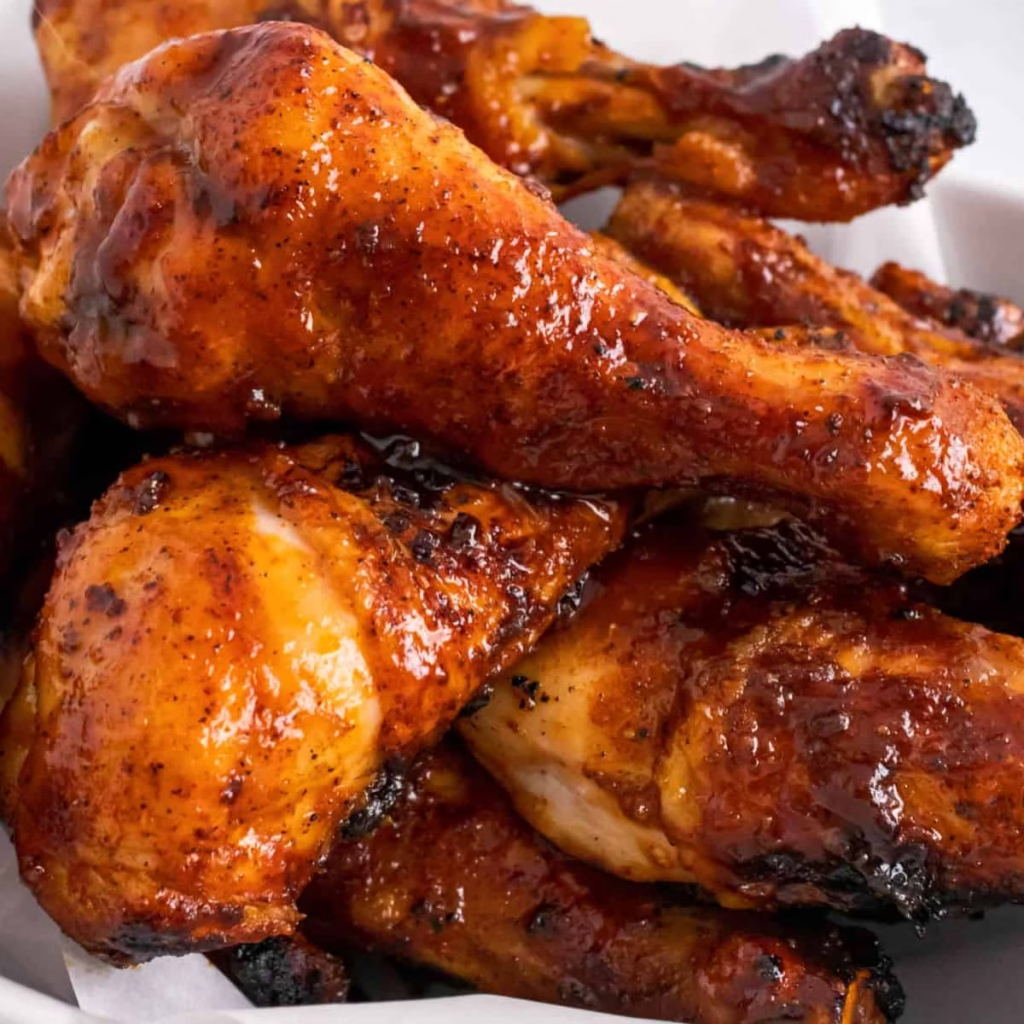
Sharing food is a key part of Zimbabwean culture, especially during Christmas. Families often prepare large meals to enjoy with guests. The most popular Christmas dish is rice and chicken. Some people cook turkey, while others—especially those hosting big family gatherings—may prepare traditional meals by slaughtering a goat or cow. These feasts are the highlight of the day!

Christmas Music and Celebrations

After the big meal, it’s time to party! Zimbabweans love music, and Christmas is the perfect excuse to turn up the volume. People bring out their big speakers and play their favourite songs—usually energetic and fun music, not necessarily religious. Dancing, singing, and celebrating with family and friends is how many choose to enjoy the rest of the day.

Decorations and Santa Claus

While some families decorate their homes for Christmas, it’s not the main focus. In Zimbabwe, togetherness and quality time matter more than decorations. The idea of Father Christmas (Santa Claus) exists, especially for young children. Many believe he brings gifts early on Christmas morning, but it’s not as big a tradition as in Western cultures.


Why Christmas Is the Most Popular Holiday in Zimbabwe

Christmas is the most celebrated holiday in Zimbabwe. Almost everyone takes part, regardless of religious background. It’s a time for family reunions, rest, and celebration.

Many Zimbabweans have two homes—one in the city and one in the rural areas (kumusha). This comes from colonial times when men had to work in cities while families remained in villages. Today, that tradition still lives on, and during Christmas, most people travel to the countryside to be with their families.

Family Reunions and Year-End Bonuses

Christmas is a time when businesses often close, giving people a chance to travel and spend time with loved ones. It’s also common—though not legally required—for companies to give Christmas bonuses as a thank-you to their workers. This makes the season even more joyful and allows families to celebrate in style.

During family gatherings, many Zimbabweans enjoy a barbecue (locally called “braai”) where goat or beef is roasted over an open fire. These meals are more than just food—they’re a celebration of culture, connection, and tradition.

While celebrations may vary slightly depending on where you are in Zimbabwe, the heart of Christmas remains the same: joy, family, music, and food.


Final Thoughts

We hope this gives you a clear picture of how Christmas is celebrated in Zimbabwe, especially among the Shona people. If you have any questions or would love to share your experience, feel free to leave a comment below. We’d love to hear from you!
 

10 Impressive Megaprojects Shaping Zimbabwe Today

Urban Renewal Work Projects In Zimbabwe


Zimbabwe is carrying out several large-scale infrastructure projects. These developments aim to strengthen the economy, improve public services, and support long-term growth.

The projects cover sectors such as energy, transport, water supply, urban development, aviation, and technology.

As of 2026, many of these initiatives are in progress or have seen recent advances. They form part of the country’s strategy to address infrastructure gaps and increase regional connectivity. Below is an overview of 10 major projects.


1. Hwange Power Station Expansion and Rehabilitation


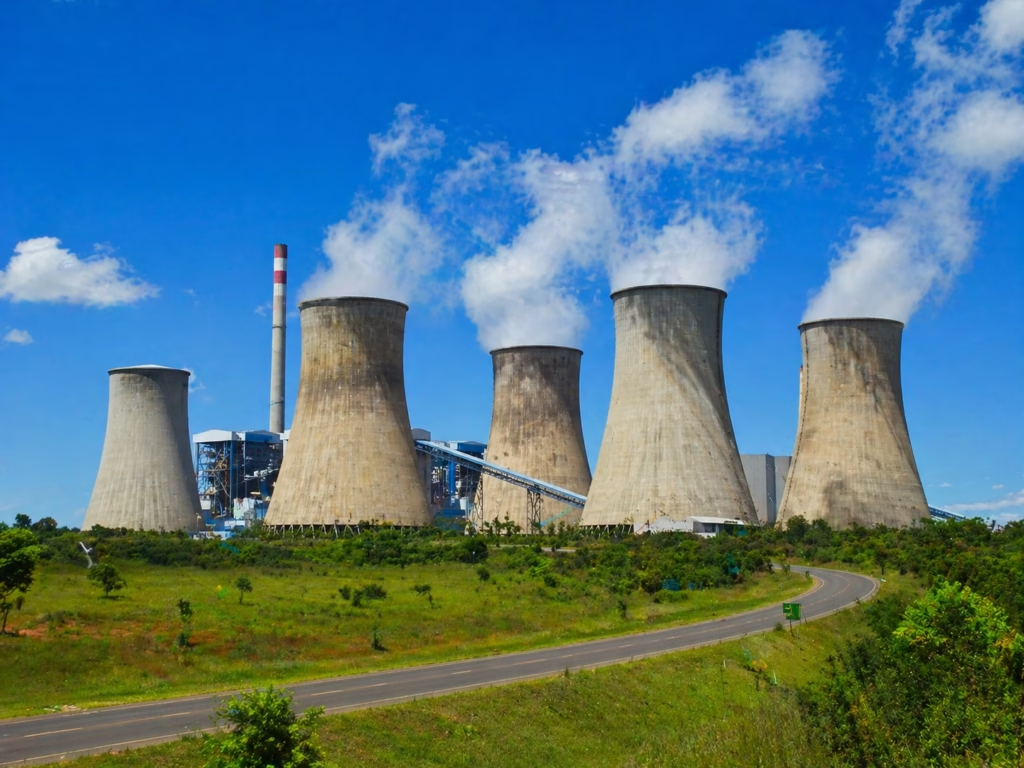
Hwange Power Station is Zimbabwe’s largest coal-fired power plant. Recent work added new units that increased generation capacity by 600 MW. In late 2025, the government approved a $455 million rehabilitation project for older units in partnership with Jindal.

Work is scheduled to begin in 2026 and is expected to add around 400 MW over four years.

The project seeks to reduce electricity shortages, support industrial operations, and improve overall energy supply. Zimbabwe’s power demand is approximately 2,000 MW, and reliable generation remains a key priority.


2. Zimbabwe Urban Renewal Project

This initiative focuses on upgrading infrastructure in major cities. It includes improvements to housing, public services, roads, and utilities.

Plans also involve developing satellite towns to manage urban growth, including areas linked to tourist sites such as Victoria Falls.

The project aims to create more balanced urban development and address overcrowding in existing city centers.


3. Beitbridge Border Post Modernization Project

Beitbridge is the main border crossing between Zimbabwe and South Africa. The modernization project, completed in phases around 2022 at a cost of about $300 million, introduced new terminals, wider roads, cargo scanners, and traffic separation systems.

Additional facilities in the border town include staff housing, a fire station, and a water reservoir. Clearance times for cargo have decreased, with many trucks now processed in under three hours. The upgrades support regional trade and logistics efficiency.


4. Matabeleland Zambezi Water Project (Gwayi-Shangani Dam)

This project addresses water shortages in Matabeleland. The central component is the Gwayi-Shangani Dam, which was reported at around 75% completion in early 2026. A pipeline is planned to transfer water to Bulawayo and surrounding areas.

When complete, the project is expected to supply water for domestic use, agriculture, and industry, helping to reduce drought impacts in the region.


5. Mt Hampden Smart City Project

The government is developing a new urban area at Mt Hampden, near Harare. The project includes government buildings, residential zones, commercial areas, and technology-focused infrastructure.

The new Parliament Building is located there, and planning involves international cooperation, including with Egyptian experts.

The development is intended to support decentralization, reduce pressure on Harare, and promote modern urban planning.


6. Harare Metro Rail Project

This proposed project involves constructing a light electric rail network in Harare. It aims to serve high-density suburbs and eventually connect to the international airport.

The system is designed to improve public transport, reduce road congestion, and enhance mobility in the capital.

Planning continues as part of broader urban transport improvements.


7. Robert Gabriel Mugabe International Airport Expansion


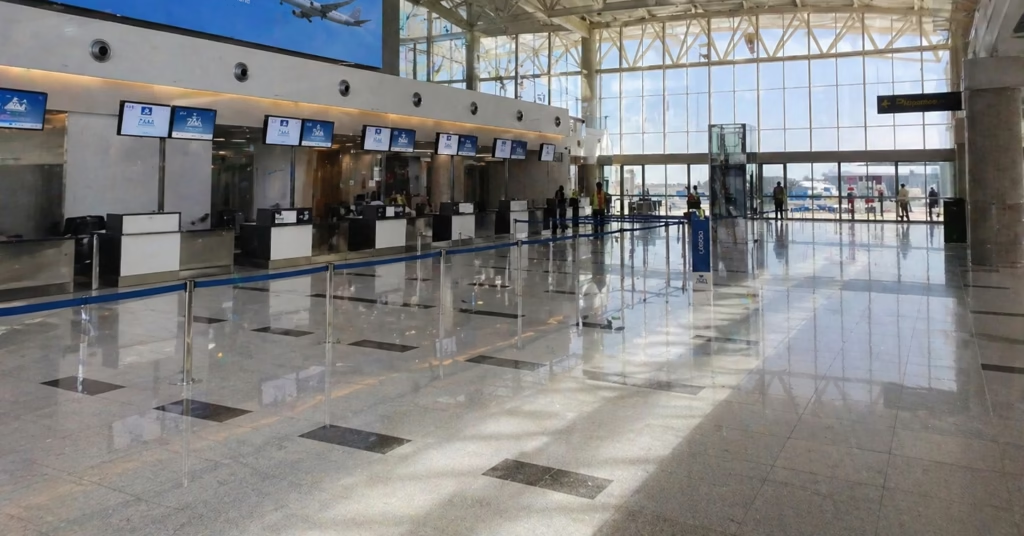
The main international airport in Harare is undergoing upgrades. These include terminal improvements, new air bridges, apron expansions, runway works, and enhanced facilities.

Recent efforts also cover the domestic terminal, with plans for a secondary runway and cargo terminal.

The expansions seek to increase passenger and cargo capacity and position the airport as a regional hub for aviation and trade.


8. Zimbabwe Roads and Highways Development Programme (including Trabablas Interchange)

A nationwide programme is underway to rehabilitate and upgrade roads. Key routes include Harare–Bulawayo, Harare–Mutare, and Harare–Masvingo–Beitbridge. In 2026, over 20 major road projects are planned, such as Harare-Nyamapanda, Harare-Chirundu, and various bypasses.

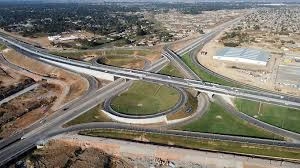
A notable project in Harare is the Trabablas Interchange (formerly known as Mbudzi Interchange). This major road interchange is designed to ease traffic congestion at a busy junction and improve flow in the capital’s road network. It forms part of the Greater Harare road development efforts.

The overall programme aims to improve road safety, facilitate the movement of goods and people, and support economic activity across regions.


9. Kariba South Power Station Expansion Project

This hydroelectric project added 300 MW (two units) to the Kariba South Power Station. It was completed in 2018 and raised the station’s total capacity to 1,050 MW. The expansion has contributed to national electricity supply since commissioning.

It remains an important part of Zimbabwe’s hydropower generation alongside other energy initiatives.


10. Zimbabwe Cyber City Project

Located in Mt Hampden, this mixed-use development includes residential, commercial, government, hotel, and industrial zones. It incorporates technology infrastructure and aims to promote innovation while helping to decongest Harare.

The project forms part of the broader Mt Hampden development and seeks to support digital economy growth and investment.


In A Nutshell

These projects reflect ongoing efforts by Zimbabwe to develop its infrastructure across multiple sectors. Energy, water, transport, and urban initiatives are central to addressing current needs and supporting future economic activity. Progress varies by project, with some completed, others advancing, and several in planning stages.

Developments in these areas are likely to influence investment, trade, and living conditions in the coming years. For those following Zimbabwe’s infrastructure and economic trends, these megaprojects provide key points of reference.

HOSTINGER WEBHOSTING

SECURE, SPEEDY, RELIABLE

Hostinger webhosting is ideal for personal, business, and eCommerce sites. A free domain, business email, and site migration are included. Enjoy weekly auto backups for easy data recovery.

A Journey Through the Heart of Africa

United Kingdom to Zimbabwe Travel

United Kingdom to Zimbabwe Travel

The United Kingdom to Zimbabwe travel for the first time can be daunting. Mo so, in the absence of a direct flight connection. I have done all the hard work for you and put together some hints and tips you probably will find valuable.

Got Your List? Check Out My Checklist!

Like any other travel, making preparations is the key to a smooth journey. At least have a checklist to guide you. I would make sure on my checklist are the following key components.

  • To buy a cheap flight ticket.
  • To research information about the entry requirements and flight restrictions.
  • To carry a valid passport and other relevant documents and not forget the vaccinations that may be required.

Different airlines fly to Zimbabwe from the United Kingdom (UK). However, there wasn’t a direct flight from the UK to Harare at the time of writing this post.

I know how it feels to prepare for your travel, especially to a place you have never been before. I will recommend the airlines I have used in the past and the ones I’ve researched.

Buy a Cheap Flight Ticket

What is the best place to buy the cheapest flight ticket?  A good starting point for doing research is looking at Trustpilot reviews. It is an online platform where you will find reliable information left by customers as feedback from real people. At least it gives you an insight into the best services on offer.

Trustpilot Research Findings

8,008 Reviews • Rating: Excellent 4.8

TrustScore 5 out of 5
TravelHouseUK | Top Rated Travel Agency in London UK Reviews


If you can’t be bothered buying the ticket yourself, you can do with some help from trusted travel agents. The Travel House UK travel agent has a high rating of 4.8 out of 5 stars.

The type of service to expect from TravelHouseUK travel agents is exceptional. It specialises in bookings for cheap flights, cheap holidays and low-cost hotels. 

Dial A Flight Reviews

 10,669 Reviews • Rating: Excellent 5.0

TrustScore 5 out of 5
Dial A Flight | Top Rated Travel Agency UK Reviews


The Dial A Flight travel agent is a trusted service provider with an excellent reputation. DialAFlight is one of the 200 best companies in the Travel agents category on Trustpilot with a rating of 5 stars.

The decision is yours whether to buy your flight ticket directly from the airline or through a ticket agent. However, you must be 100 % sure you’re dealing with a genuine agent because of scams operating under the guise of travel agents.

If you buy your flight ticket online, be 100 % certain you are on the correct website. Do a double-check to make sure you’re on the right platform.

United Kingdom to Zimbabwe Travel

Picking the Perfect Flight Ticket


In Zimbabwe
In Zimbabwe

I’m one person who hates long flights with long stopovers. So, I am always searching for fewer hours and the cheapest ticket.

If you search on Google Travel, it gives you an overview of the best flights, the durations and the prices. Including information on the travel restrictions and if you need proof of COVID-19 vaccination or a negative test.

Prices are currently high for your trip. The least expensive flights for similar .trips to Harare usually cost between £900–1,500 –

Google Travel

Air Flights to Zimbabwe from the UK

Starting your preparations well in advance will give you more chances to get a cheap flight ticket to Zimbabwe. International flights change prices depending on particular seasons.

The summer and festive months are peak seasons. The weather will be exceptional, but the prices on flights are ridiculously higher.

Some airlines accept payment in instalments, so if you do your preparations in plenty of time, you will get the best deal. I have used Ethiopian and Emirates airlines. I will share information from my lived experiences and my research findings.

Ethiopian Airlines

I have flown with Ethiopian Airlines twice from London Heathrow Airport to Addis Ababa and then to Harare. Alternatively, you can fly from Birmingham (BHX) Airport, the United Kingdom to Harare (HRE) Airport, Zimbabwe.

The last time I travelled with Ethiopian Airlines in 2017, the Baggage Allowance was 2 pieces of luggage. Avoid making the stupid mistake I made.

I had to part away with extra cash for extra baggage. The stopover time in Addis Ababa was at least 3 hours. These days the duration of flying with Ethiopian airlines ranges from 16 hours to 29 hrs 30 mins with 2-3 stopovers.

Emirates Airlines

I have flown to Harare from Birmingham with Emirates Airlines for 18 hours and 45 minutes in 2022. Connection in Dubai was 1 hour 20 minutes.

Passengers must wear masks on board all the time throughout their trip. The highlight for me is that sadza and stew are on the menu. The air hostess greeted me in Shona, this made me feel at home.

There are other flights to Harare from the United Kingdom that I haven’t used that offer a regular service. These include Qatar AirwaysBritish AirwaysKenyan Airways and South African Airways

Check on Travel Requirements

For any form of travel, you need to check on entry requirements. What are the entry requirements to Zimbabwe and back to the United Kingdom?

Including your airline requirements, the rules around dangerous goods from the airline. Travel rules change, so to have up-to-date information, it’s advisable to check on official websites.

(1) Zimbabwe travel advice – GOV.UK

(2) Visa Information – Zimbabwe Embassy London

(3) What People Ask

What people ask can also help you with your preparations. Nothing prepares you better for your travel to Zimbabwe from the United Kingdom than getting up-to-date information.

Travel rules and requirements change from time to time, so you need to be on your toes sniffing out the late update visiting official websites. For example, the last time I travelled to Zimbabwe, passengers were expected:

If you’re fully vaccinated:

If you’re fully vaccinated, you can enter Zimbabwe by presenting a vaccine certificate (2 doses) for one or more of the World Health Organisation-approved vaccines. Alternatively, you can show a valid negative test certificate of a COVID-19 PCR test taken no more than 48 hours before departure.

Hopefully, you find my post Travel to Zimbabwe from the United Kingdom informative. Please share your travel hints & tips and leave any questions be

Living in Zimbabwe – Common Misconceptions Explained

Many people around the world still have misunderstandings about life in Zimbabwe, despite the country being rich in culture, modern cities, and a growing online presence. This post highlights and explains the most common misconceptions about Zimbabwe, especially from a Shona cultural perspective.


Misconception #1: Zimbabwe Is All About Wild Animals

One of the biggest myths is that Zimbabwe is just full of wild animals. Many foreign visitors expect to see wildlife everywhere—on the streets, in towns, or even near people’s homes. This idea is far from the truth.

In reality, wild animals live in national parks, game reserves, and zoos, not in cities or towns. Zimbabwe has a modern transport system, tall buildings, and urban infrastructure—just like other countries.

I remember a personal story from when I joined a cultural exchange programme abroad. During a visit to a local school, some students asked me how Zimbabweans live “side by side” with animals. I was surprised, but I realized their question came from a place of curiosity, not ignorance. They simply didn’t know any better—and that’s exactly why we need to share real stories about life in Zimbabwe.

Social Media Is Changing the Narrative

Thanks to platforms like TikTok, Instagram, and Facebook, more people are now seeing what life in Zimbabwe really looks like. These glimpses into daily life help correct the false image that the country is all wildlife and no civilization.

People now realise that Zimbabwe is not what is shown in outdated news reports or documentaries. There’s urban life, modern homes, entertainment, and a strong sense of culture and community.

Misconception #2: All Africans Are the Same

Another misconception is that all African people are the same. Africa is a continent, not a country. Just like Europe or Asia, each country in Africa has its own cultures, languages, and traditions.

Zimbabwe is home to different ethnic groups, and one of the largest is the Shona people, who have rich customs, traditions, and ways of life. Assuming all Africans live the same way shows a lack of awareness.

Misconception #3: Zimbabweans Live in Huts

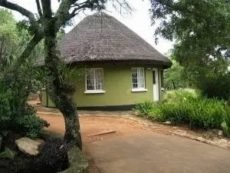
While some traditional homes still exist, especially in rural areas, many Zimbabweans live in modern houses. In fact, people often have two homes—one in the city and one in the countryside. This dual lifestyle is a legacy of Zimbabwe’s history and economy.

Today, even in rural areas, you’ll find beautiful homes built with modern materials—some even look like resorts. The image of people living only in mud huts is outdated and inaccurate.

Misconception #4: Zimbabweans Live With Wild Animals

This is a big myth. People do not live with wild animals in their homes or backyards. Zimbabweans love their wildlife, but it is well-managed and protected in specific conservation areas.

These protected areas also bring economic value to the country through tourism, employment, and conservation efforts.

Misconception #5: All Africans Are Poor, Sick, or Starving

This harmful stereotype is often shown in the media. While Zimbabwe, like many other countries, faces challenges, it’s not defined by poverty or disease.

Yes, Zimbabwe has had its share of economic and health struggles, but it’s also a country full of hardworking people, innovation, and growth. Diseases happen everywhere—not just in Africa. What matters most is how a country prepares and responds.

The Real Zimbabwe: More Than What You’ve Heard

Zimbabwe is more than what you see on TV or read in headlines. To understand it, you need to experience it yourself. Whether it’s the buzzing city of Harare, the cultural richness of Shona traditions, or the peaceful life in the countryside, Zimbabwe has many stories to tell.

There are many Zimbabweans living abroad, but they stay connected to their roots. Zimbabwe is home—and identity matters. Your children or grandchildren may one day ask, “Where are we originally from?” What will you tell them?

Final Thoughts: Why You Should Explore Zimbabwe For Yourself

. Don’t believe everything you read or hear.

. Use social media, real stories, and personal travel experiences to learn.

. If you get the chance, visit Zimbabwe and see the beauty, culture, and people for yourself.

. Ask questions, do research, and always stay open-minded.

Hopefully, this post helped you understand more about living in Zimbabwe and cleared up some of the most common myths and misconceptions.

If you have any questions or would like to share your own experiences, leave a comment below—I’d love to hear from you!

What It Really Means to Be Zimbabwean Abroad

Living Outside Zimbabwe


I heard from friends that my old college mate, Sanders, had moved to live permanently in America. Everyone in our neighbourhood was talking about it. He had reportedly built a beautiful, modern mansion for his parents. People noticed how their lifestyle had completely changed. They were now considered part of the wealthiest in the area.

Some people who knew Sanders well said he also owned a popular restaurant at Norton Centre. But he was clever—he put the Z-Brothers in charge so it wouldn’t be linked to him directly.

Looking at what Sanders had achieved, I could now see why leaving his home country had made sense. Even though it must have been a hard decision, it was clearly the best one he ever made.

When I told others that Sanders and I studied Psychology together at the University of Zimbabwe, most didn’t believe me. Our lives were now very different. Despite having a good education, I had nothing to show for it. Fifteen years of working had left me without even a decent house or car. Many of us who graduated at the same time were not earning salaries that matched our qualifications. Life was tough, and only a few seemed to succeed—possibly through dishonest ways.

Now that Sanders was earning in US dollars, nothing could stop him from chasing his dreams. In our society, money gives you power and influence. That made me realise I had to act fast or risk dying poor.

So I decided to reach out to Sanders’s parents. I asked for his contact details in America. They didn’t hesitate to help me; we had known each other since college.

Soon after, I contacted Sanders. Things moved quickly. I sorted out my visa and bought my plane ticket. I gave away most of my few belongings to my brothers before leaving. I wasn’t married yet, and I felt there was no point in holding on to anything.

I held a farewell party in an old city council hall—the only venue I could afford. But many people came, making it a memorable event.

When I arrived at Philadelphia International Airport, Sanders was waiting for me. Before hugging him, I knelt and kissed the ground—a symbolic act I had heard about. It was said to bring good luck in a new land. I believed it would help me start my life well.

But I didn’t know that I was entering a new kind of struggle. For the first three months, I stayed with Sanders in his rented apartment. That helped me settle in, but I knew I needed to find my own place soon, especially since he was living with his partner. Three people in one small flat was too much.

Even though I spoke English well back home, people here often didn’t understand me. They kept saying, “Pardon?” I realised my accent was a problem. I had to work hard to improve it or face constant embarrassment.

I read once that it’s hard to change your accent after the age of thirteen. But I wasn’t ready to give up.

This year marks my eleventh year in America. I still can’t survive on one job. Living here is expensive. Every month I pay for rent, gas, car insurance, health care, and more. And back home, I also support my large family.

I’m the one looking after our parents. I even help my four married brothers with school fees for their children and maternity bills for their wives. It’s like the entire family depends on me.

People back home think life is easy abroad—that we live in luxury. But they don’t know how hard we work here. Most immigrants don’t have the freedom to choose the jobs they want. Helping others sometimes feels like carrying a heavy chain around my neck. It never ends.

When I moved to America, I thought I had escaped my financial struggles. But I’ve worked day and night without rest. I’ve sacrificed my social life. I barely have time for dates, and relationships haven’t worked for me. Maintaining a relationship requires time, effort, and money—things I don’t have.

I’ve tried dating, but the pressure of work and family responsibilities always got in the way. Even with two jobs, I couldn’t afford the lifestyle needed to build a strong relationship.

It’s been ten years, and I still haven’t found a life partner. I came here full of energy and dreams. Now, I feel tired and unsure about the future.

Ironically, my brothers back home are doing well. Their kids go to private schools. They live in nice homes. All of this is because I helped them. But sometimes I wonder—was it all worth it?

In America, I can’t afford the house I dreamed of. I do own a car, but that’s common here. Everyone has one.

If I had known how hard life would be here, I might have stayed in Zimbabwe. Maybe I would have married, started a family, and passed my name on to my children. Now I understand—money alone is not enough. If you chase it without balance, it can bring sadness instead of happiness.


Zimbabwe’s Festive Season

In Zimbabwe

How They Celebrate Christmas in Zimbabwe

What is living in Zimbabwe like? How they celebrate Christmas gives us a glimpse of the Zimbabwean lifestyle. People from all walks of life enjoy the festive celebrations.

Christmas in Zimbabwe is a big deal. During the time I was growing up as a child, it was. I am pretty sure it is still the same. It is that time of the year to have a good time to take a break in retrospect.

Many people plan for months on how to celebrate this glorious occasion with loved ones. It seems as if everything stops temporarily just for the celebrations.

I know Zimbabweans for having two homes. Some travel to the villages or kumusha to spend time with their relatives and friends. Whilst others remain in the cities. All the same, Christmas is a time to take a break.

Zimbabwe declares Christmas a national holiday, so it’s convenient for everyone to be on board because they won’t go to work.

Christmas unites Christians and non-Christians alike. There might be slight differences here and there in the actual celebrations themselves.

The bottom line is that everyone knows this is the time for Christmas. They stop whatever they are doing to celebrate in their ways.

Zimbabweans are passionate about family togetherness, especially at Christmas. The festive holiday always brings them together to celebrate in unison, whether they are born again and believe in Jesus or not.

In Zimbabwe, the big day runs on 25 December. Christians start the day by going to church in the morning to celebrate the birth of Jesus Christ. During the Christmas service, they may sing Christmas carols.

Afterwards, they have gatherings at home to remain with their families and share some nourishments and gifts.

Before the actual Christmas day, people do a lot of preparations. They go shopping for new clothes, groceries, gifts and presents. Everyone wears their best clothes.

For some people, the only new clothes they get every year are for Christmas. The parties are places to show off their dance moves and new clothes.

On Christmas, everyone is free to visit other people’s homes or to stop by just briefly for a chat and to eat Christmas goodies. The Zimbabwean culture at Christmas is about sharing food.

A day to expect visitors, so your home has to be open to them. Also, neighbours who can come briefly to say Merry Christmas! Have something to eat, exchange presents and enjoy the party.

The most popular dish for Christmas is rice and chicken. These days some buy turkeys, but families with many people coming over for the celebrations may end up slaughtering a beast, a goat.

After eating Christmas besties, it’s time to take out their stereo speakers and blast their favourite music! Playing loud music, people dancing and perhaps singing marks the celebrations.

The music they play might not be of the Christian genre. It is to make them happy and have fun.

As for Christmas decorations, Zimbabweans are not so fussy about decorations. Some people love to hang decorations in their homes. The main thing is togetherness and spending quality time.

People rarely talk much about Santa. Children in Zimbabwe believe that Father Christmas brings presents early on Christmas Day.

The Most Popular Holiday In Zimbabwe

To put everything into context, lets look at the history of Christmas in Zimbabwe.

Christmas is Zimbabwe’s No 1 favourite holiday celebrated by almost everyone. Most people in Zimbabwe have two homes. One in the city and one in the villages. A remnant of the colonial legacy.

The colonial era (1890-1980) saw the growth of industries in towns and cities. Men were required to seek work in urban areas and live there, leaving women and children in rural areas. Most jobs are in urban areas and people still have two homes.

Christmas is a breath of fresh air, and everyone looks forward to it as it opens a window of opportunity for family reunions. Family visits are extraordinary this time of year. People take time off when businesses close.

The exciting thing is that many businesses give bonuses to show their appreciation for their employees’ hard work throughout the year. Although I should hasten to say there are no legal obligations for employers to pay their staff Christmas bonuses.

During the festive season in Zimbabwe, all roads lead to the countryside to celebrate Christmas. During Christmas and New Year family gatherings, Zimbabweans barbecue or roast a goat or cow to celebrate.

The consensus is that Zimbabweans celebrate Christmas. There may be slight differences in different geographical locations.

Hopefully, you find my post, How They Celebrate Christmas in Zimbabwe informative. And if you have any questions at all, do know that I am available and ready to respond. Leave your comments below.

A Simple Guide to Zimbabwe: History, People, and Culture

History of Zimbabwe

Zimbabwe, also called the Republic of Zimbabwe, is a beautiful country in Southern Africa. It doesn’t have a coastline but is surrounded by two big rivers—the Zambezi River in the north and the Limpopo River in the south.

A Look at Zimbabwe’s History

To understand Zimbabwe, we need to go back in time:

  • Pre-Colonial Era (1000–1887) – Before Europeans arrived, Zimbabwe was home to powerful African kingdoms like Great Zimbabwe.
  • Colonial Era (1890–1980) – Zimbabwe was taken over by the British and was called:
    • Southern Rhodesia (1898),
    • Rhodesia (1965), and
    • Zimbabwe Rhodesia (1979).
  • Independence (1980–2000) – Zimbabwe became independent from Britain in 1980.
  • The Present (2000–Now) – The country has faced many changes in politics and the economy since 2000.

Zimbabwe’s Neighbours

Zimbabwe shares borders with:

  • South Africa (south)
  • Botswana (south-west)
  • Zambia (north)
  • Mozambique (east)

Cities and Population

  • The capital city is Harare, and it’s also the largest.
  • Bulawayo is the second largest city.
  • Other towns include Chitungwiza, Mutare, Epworth, and Gweru.

As of August 9, 2022, Zimbabwe had around 16.3 million people. About 32% of people live in towns or cities. Most families are headed by fathers and have at least two children.


Who Lives in Zimbabwe?

  • Shona people – about 70% of the population.
  • Ndebele people – about 20%.
  • Other groups include Venda, Tonga, Kalanga, Shangaan, and Nambya.
  • Less than 1% are White Zimbabweans (mostly from British families, but also some Greek, Portuguese, Dutch, and French).
  • Mixed-race people make up around 0.5%.

Languages in Zimbabwe

Zimbabwe has 16 official languages, more than any other country in the world! These include:

  • English, Shona, Ndebele, Tonga, Venda, Kalanga, Tswana, Xhosa, Sotho, Shangani, Chewa, Chibarwe, and even Sign Language.

Zimbabwe Official Languages

EnglishShona
NdebeleChibarwe
KalangaKoisan
NambyaShangani
Sign language Sotho
TongaTswana
ChewaNdau
VendaXhosa
Zimbabwe 16 Official Languages

Religion in Zimbabwe

  • 84% of people are Christians (most are Protestants – 69.2%)
  • 10.2% have no religion
  • 4.5% follow traditional African beliefs
  • Other religions (like Islam, Hinduism, and Judaism) make up 1.2%

Many Zimbabweans mix Christian beliefs with traditional beliefs. New Christian churches, like Pentecostal and apostolic groups, are growing fast.


Zimbabwean Culture

Zimbabwean society values family and community. For centuries, people have solved problems within families and villages. Important things like religion, learning, leadership, and peace have always started at the family level.

The culture is mainly influenced by the Shona and Ndebele people. There are also small communities of Asians and White Zimbabweans.


Why Zimbabweans Moved Abroad

Many Zimbabweans have moved to other countries over the years. Migration is not a new trend associated with Zimbabweans. For years, Zimbabweans have been crossing borders into neighbouring countries.

In the 1970s, some went to South Africa to work in the mines (this was called Wenera). Others moved to Britain, the USA, Australia, Canada, and New Zealand.

Reasons for Leaving:

  • 1980s – Some White Zimbabweans left after independence.
  • 1990s – People left due to poor economy and government changes, especially after the ESAP (Economic Structural Adjustment Programme), which made things worse for many.
  • Late 1990s–2000s – More people left due to political and social problems.

Some went as workers and some as students. , and others without legal documents. But they all hoped for a better life.


Staying Connected to Home

Even though many Zimbabweans live abroad, they stay in touch with family back home. They often send money (remittances) and support during hard times—like during the Tsholotsho floods in 2017 and the Manicaland storms in 2020.

This shows that no matter where they go, home is still home.


What Makes Zimbabwe Special?

  • Zimbabwe holds the world record for the most official languages (16)!
  • Independence Day is celebrated on April 18, marking freedom from British rule in 1980.
  • Zimbabwe shares the famous Victoria Falls with Zambia. Its local name is Mosi-oa-Tunya, meaning “The Smoke that Thunders.”
  • Lake Kariba, along the border with Zambia, is the world’s biggest man-made lake.
  • The economy depends on gold, minerals, and farming exports.

Thanks for reading! We hope you enjoyed this short guide on Zimbabwe. If you have questions or thoughts, please leave a comment—we’d love to hear from you!

Watch Wode Maya Video – Zimbabwe Is NOT What I Expected!

References

  • Watch Wode Maya YouTube Video – Zimbabwe Is NOT What I Expected!
  • Great Zimbabwe: African City of Stone, Live Science, 10 March 2017.

Discover the legendary rulers of Great Zimbabwe,
from ancient kingdoms to colonial struggles
and modern influences.
Watch History Videos Here

What Is Shona? Language, Dialects & History Explained

Why Shona Dialects Are Disappearing (And Why It Matters)

Shona is one of the 16 official languages of Zimbabwe—and as my mother tongue, it holds a deeply special place in my heart. Growing up speaking Shona, I’ve learned firsthand the profound beauty and complexity of this language.

But there is a hidden crisis happening right under our noses: our diverse Shona dialects are slowly disappearing. Today, approximately 75% of the Zimbabwean population speaks Shona, a prominent member of the vast Bantu language family (Mutasa, 1996).

However, the Shona taught in schools and broadcast on the news isn’t the whole story. To understand why our rich, localized ways of speaking are fading, we have to look back at history.

The Elephant in the Room: How Standardisation Almost Killed the Shona Language

Historically, the Shona language wasn’t a single, rigid block of vocabulary. It was a beautiful tapestry of interconnected dialects. So, who introduced the “Standard Shona” we see in textbooks today?

During the colonial administration (1890–1980), missionaries struggled to communicate with the local population across different regions. To make their work easier, they decided it was necessary to create a single, unified language.

To solve this “problem,” the Rhodesian administration invited South African linguist Clement Doke in the early 1930s. Perceived as the ultimate expert, Doke was tasked with standardising the spelling, word division, and grammar.

This administrative decision gave birth to Standard Shona, which rapidly became the sole official language for writing school books, newspapers, and official documents.

The Excluded Voices: Dialects Thrown Out of the Curricula

While standardisation made printing books easier, it was an enormous blunder for indigenous linguistic diversity. The policy heavily watered down the language, effectively sidelining the immense richness of traditional Shona.

By making Standard Shona the official benchmark, the system forced indigenous people to read and write a very specific version of the language.

In the process, several rich dialects and sub-dialects were excluded from formal education and official use, including:

  • Zezuru
  • Korekore
  • Ndau
  • Kalanga (historically grouped with Shona, though often recognized as distinct today)
  • Venda (similarly affected by regional standardisation policies)
  • Manyika and Karanga

Was Standardising the Shona Language a Mistake?

According to linguistic researcher Mhute (2016), standardisation under normal circumstances shouldn’t force a population to abandon more than half of their natural way of speaking. Yet, in Zimbabwe, that is exactly what happened.

The Shona people had been speaking diverse varieties that were robust enough to be considered independent languages. The new language policy forced generations of Zimbabweans “to speak in a prescribed way, in spite of whether they really speak the same language or not.”

The Domino Effect: From Language Shift to Language Death

When a nation’s official policy excludes regional dialects from schools, media, and government, a dangerous psychological shift occurs. Speakers lose the motivation to continue using their ancestral, localized ways of speaking.

If children aren’t taught their specific dialect in school, and if it isn’t viewed as “professional” or “standard,” they slowly stop using it. This lack of daily use leads directly to language shift, and eventually, the irreversible death of that particular dialect.

Instead of promoting multilingualism and preserving our heritage, the standardisation of the Shona language corrupted a once-vibrant, multi-faceted linguistic ecosystem.

Let’s Keep Our True Languages Alive

As a proud Shona speaker, I believe it is our responsibility to recognize the full spectrum of our language. By understanding the colonial history of Standard Shona, we can make a conscious effort to celebrate, speak, and pass down the unique dialects of our ancestors.

Over to you! Did you find this deep dive into Zimbabwe’s languages informative? Have you noticed the loss of your own local dialect over the years?

I would love to hear all about your personal experiences. Please leave your thoughts and questions in the comments below! Let’s keep the conversation—and our dialects—alive.