G-CR2DVHP8J7

The Mbada (Leopard) Totem: Symbol of Stealth, Courage & Ancient Shona Power

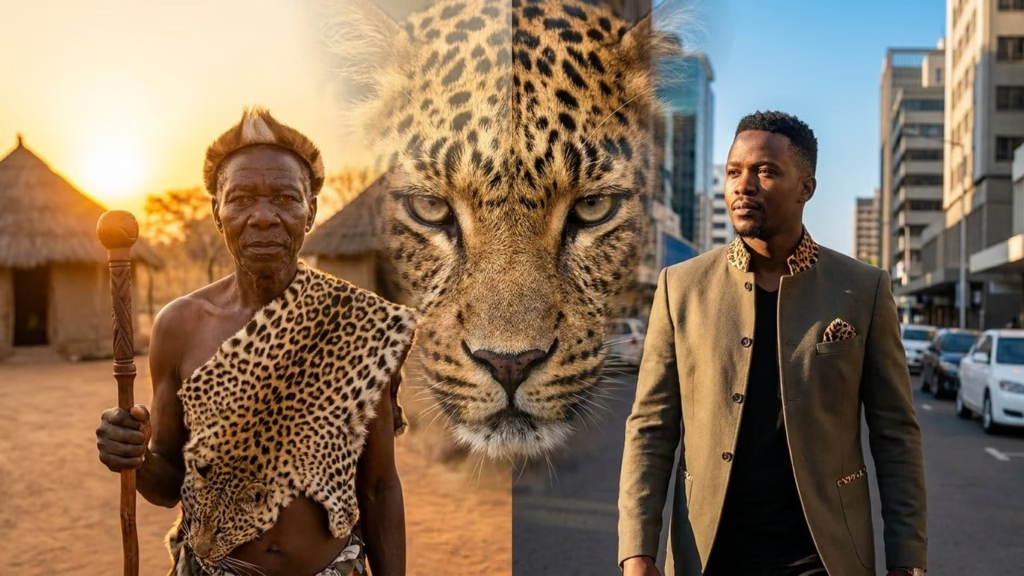
In the misty highlands of Zimbabwe, where ancient forests whisper secrets and shadows move with purpose, one creature commands silent respect — the leopard. Known as Mbada, Ingwe, or Nhewa in Shona culture, this majestic animal is far more than a wild predator. It is the living emblem of one of Zimbabwe’s most respected totems: the Mbada (Leopard) Totem, also associated with the Simboti or Nhewa clans.

This blog post explores the rich history, cultural significance, praise names, taboos, and enduring legacy of the Mbada totem. Whether you carry this totem or simply love African heritage, prepare to be inspired by its mystery and grandeur.

The Leopard: A Silent Guardian of Strength

Unlike the roaring lion, the leopard strikes without warning — agile, intelligent, fearless, and perfectly adapted to its environment. For the Shona people, these qualities made the Mbada the perfect symbol for clans that value cunning strategy, quiet resilience, and unshakable courage.

Totems (mitupo) in Shona culture are sacred links between people, ancestors, and nature. They guide identity, marriage rules, and even conservation practices. The leopard totem teaches its bearers to move with purpose and strike decisively when needed.

Ancient Origins and Migration

The story of the Mbada totem stretches back to the great Bantu migrations. As Shona ancestors journeyed southward centuries ago in search of fertile lands, they observed the natural world and chose powerful symbols for their clans.

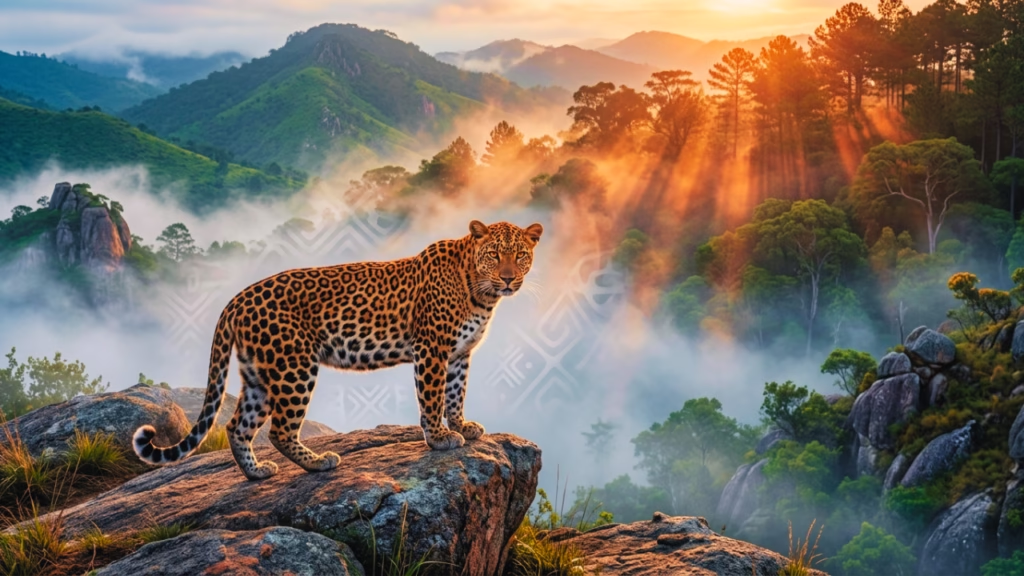
The leopard’s ability to thrive in diverse terrains — from dense forests to rocky highlands — mirrored the adaptability of these early settlers. Many Mbada/Simboti clans eventually made their home in Zimbabwe’s eastern highlands, particularly around Nyanga, Honde Valley, Tangwena areas, Mutoko, and parts of Mashonaland East. Some trace their deeper roots to the Sena region in Mozambique.

Identity, Praise Names & Traditional Taboos

In Shona tradition, your totem is your cultural DNA. People of the same totem regard each other as family.

Common Praise Names (Zvidawo / Chidawo):

  • For men: Simboti, Simboti Tsoka, Chikatsa
  • For women: Chirukamachira Nhewa, Chiruka

When greeting or praising someone with this totem, you might hear:
“Mwaita Nhewa, Ingwe ina mavara… Simboti, Chiruka, Nyakuzvibatira, Chikatsa…”

This beautiful praise poetry celebrates the spotted leopard that moves like wind and strikes with precision.

Important Taboos:

  • It is forbidden to hunt, kill, eat, or use leopard skin. Doing so is believed to bring misfortune.
  • Marriage within the same totem is traditionally avoided (considered like marrying a relative).

These rules have helped protect wildlife and maintain strong social bonds for generations.

Rise of Kingdoms and Historical Role

Mbada clans played vital roles in Shona societies, especially in the eastern regions. Dynasties such as the Tangwena rose in the highlands, embodying the leopard’s strategic strength. While not always at the center of empires like Mutapa, these clans contributed to governance, defense, trade, and cultural preservation across Zimbabwe.
Remarkable Achievements & Living Legacy

The Mbada totem has produced leaders known for quiet but unbreakable resolve. The most celebrated example is Chief Rekayi Tangwena (Nhewa/Simboti totem), a national hero who fearlessly resisted colonial land grabs in the 1960s–70s. He protected his people’s ancestral lands and supported the liberation struggle, becoming a symbol of dignity and courage.

Today, bearers of the Mbada totem continue to excel in leadership, community development, arts, and professional fields — carrying forward the leopard’s spirit of resilience and intelligence.

Where to Find Mbada Totem People Today

You’ll find strong Mbada/Simboti/Nhewa communities in:

  • Manicaland Province (Nyanga, Honde Valley, Tangwena, Rusape)
  • Mutoko and surrounding Mashonaland East areas
  • Scattered across Harare, Mutare, and other urban centers

Wherever they are, they maintain deep pride in their heritage through family gatherings, ceremonies, and oral traditions.

Reflection: The Leopard’s Timeless Lesson

As the leopard disappears into the shadows at dawn, it leaves behind a powerful message: true strength does not always roar — sometimes it moves in silence, observes wisely, and acts with precision.

In a fast-changing world, the Mbada totem reminds us to stay adaptable, protect what matters, and face challenges with courage and grace.

What’s your totem? Share in the comments below — and if you carry the Mbada spirit, let us know what it means to you!


The Meaning of Totems (Mitupo) in Shona Culture: A Deep Connection to History

If you spend time with Shona people, one question you may hear often is: “What is your totem?” This is not just small talk. It is a question about identity, history, and belonging.

Totems, known as mitupo in Shona, are one of the most important parts of Shona culture. They connect people to their ancestors, guide social behavior, and help define family relationships. Even today, in both rural and urban life, mitupo continue to shape how people relate to each other.

But where did this system come from, and why has it lasted for so long?

The Ancient Origins of Mitupo

The exact time when mitupo began is not known. This is because the system existed long before written history. Like many African traditions, it was passed down through oral storytelling from one generation to the next.

However, historians believe that totems may have developed during the Early Iron Age (around 300–1000 CE) or even earlier. This was during the time when the ancestors of the Shona people were settling in southern Africa.

The Shona are part of the larger Bantu-speaking family, and many Bantu cultures across Africa use similar totem systems. This suggests that mitupo may have come with early migrations and then developed further over time in Zimbabwe.

How Migration Shaped Totems

Around 2000 years ago, Bantu-speaking groups migrated from Central and West Africa into southern Africa. As they settled, they built farming communities, raised livestock, and formed structured societies.

With growing populations came the need for:

  • Identity
  • Order
  • Social rules

This is where mitupo became essential.

Totems helped people understand who they were, who they could marry, and how they were connected to others. In simple terms, mitupo became a social system that held communities together.

Why Totems Were Created

Totems were not random. They were created to serve clear and practical purposes in society.

1. To Control Marriage

One of the most important roles of mitupo is to regulate marriage. In Shona culture, people are not allowed to marry someone with the same totem.

This rule, called exogamy, helps prevent close relatives from marrying each other. It also encourages relationships between different families and clans, strengthening unity.

Even if two people have never met before, sharing the same totem means they are considered family.

2. To Honor Ancestors

Mitupo are deeply connected to ancestral worship, which is central in Shona culture.

Each totem is linked to a founding ancestor. These ancestors are believed to guide and protect their descendants.

Because of this, totems are treated with great respect. They are not just symbols—they represent a living connection between the past and the present.

3. To Organize Society

Totems also help organize society into clans and family groups.

Each clan has:

  • Its own totem
  • Its own history
  • Its own identity

This makes it easier to understand relationships and maintain order within the community.

Who Created the Totem System?

There is no single person who created mitupo. The system developed slowly over many generations.

As different groups settled in different areas, they formed clans. Each clan adopted a totem, often based on animals or symbolic meanings.

Some common Shona totems include:

  • Shumba (Lion) – strength and leadership
  • Nzou (Elephant) – power and wisdom
  • Mhofu (Eland) – gentleness and grace

These were not random choices. They reflected qualities that each clan valued or identified with.

Totems in the Great Zimbabwe Era

By the time of the Great Zimbabwe civilization (11th–15th centuries), mitupo were already well established.

Great Zimbabwe was a powerful and organized society. It had strong leadership, trade networks, and social systems. Totems played an important role in maintaining this structure.

During this time, mitupo helped with:

  • Identity – showing which clan someone belonged to
  • Social order – helping define roles in society
  • Marriage rules – preventing incest
  • Unity – connecting different families across the kingdom

This shows that the totem system was not only cultural but also political and social.

Totems and Everyday Identity

Even today, mitupo are part of daily life.

Each totem is linked to a praise name, called a chidao. These are used in greetings, ceremonies, and formal situations.

For example:

  • Shava (Eland) is often associated with Mhofu
  • Moyo (Heart) is associated with Ndizvo

Using someone’s totem or praise name is a sign of respect. It shows that you recognize their ancestry and identity.

Cultural Rules and Respect

Totems also guide behavior.

People are expected to respect their totem and avoid actions that may dishonor it. In some cases, this includes not eating the animal linked to their totem.

There are also strong cultural expectations around:

  • Respecting elders
  • Greeting properly
  • Understanding family connections

All of these are influenced, directly or indirectly, by the totem system.

Why Mitupo Still Matter Today

In a fast-changing world, mitupo continue to give people a sense of identity and belonging.

They remind people of:

  • Where they come from
  • Who their ancestors are
  • How they are connected to others

For many Shona people, knowing your totem is just as important as knowing your surname.

Even younger generations, growing up in cities or abroad, often return to their totems as a way of reconnecting with their roots.

Final Thoughts

Mitupo are more than cultural symbols. They are a system that has shaped Shona society for centuries.

Even though we do not know exactly when they began, their purpose is clear. They were created to:

  • Organize society
  • Regulate marriage
  • Strengthen relationships
  • Honor ancestors

Today, they remain a powerful link between the past and the present.

In the end, mitupo are not just about identity—they are about connection. Connection to family, to history, and to something much bigger than oneself.